Professional Bathroom and Locker Room Sanitization in Dallas
Comprehensive disinfection protocols that exceed health standards and create safe, fresh environments for employees and visitors
Professional Bathroom and Locker Room Sanitization in Dallas
Comprehensive disinfection protocols that exceed health standards and create safe, fresh environments for employees and visitors
Commercial restrooms and locker rooms represent critical control points for facility hygiene and occupant health. These high-use, high-moisture environments harbor bacteria, viruses, fungi, and odors that require professional-grade sanitization beyond routine cleaning. For Dallas businesses, where health department compliance and employee wellness directly impact operations, professional bathroom and locker room sanitization provides essential protection.
Professional sanitization services employ EPA-registered disinfectants, specialized equipment, and systematic protocols to eliminate pathogens and control odors at their source. Unlike surface cleaning that merely moves soils around, professional sanitization addresses contamination comprehensively—from visible fixtures to hidden breeding grounds in drains, grout lines, and ventilation systems. For Dallas healthcare facilities, fitness centers, schools, and corporate offices, this level of thoroughness is essential for maintaining the health standards that protect your people and your reputation.
Comprehensive Sanitization Protocols for Commercial Restrooms
Professional restroom sanitization follows systematic protocols that address every surface and potential contamination point. The process begins with assessment and high-dusting to remove accumulated debris from vents, light fixtures, and corners. This preparation ensures that subsequent disinfection reaches all surfaces effectively.
The core sanitization process applies EPA-registered hospital-grade disinfectants with documented kill claims against relevant pathogens including influenza, norovirus, MRSA, E. coli, and Salmonella. Proper dwell time—typically 5-10 minutes depending on the product and target organisms—is critical for efficacy. Technicians ensure disinfectants remain wet on surfaces for required contact times rather than wiping immediately.
Comprehensive service addresses all restroom elements: toilets and urinals (including hard-to-reach areas behind and around fixtures), sinks and faucets, countertops, mirrors, dispensers, partitions, walls, floors, and baseboards. Specialized tools reach into crevices and around plumbing where bacteria accumulate. Final inspection ensures complete coverage and addresses any remaining concerns before the restroom returns to service.
- -Complete disinfection of all restroom surfaces
- -EPA-registered hospital-grade disinfectants
- -Proper dwell time for pathogen elimination
- -Hard-to-reach area attention
- -Final quality inspection protocol
Locker Room Deep Cleaning and Disinfection Procedures
Locker rooms present unique sanitization challenges due to high humidity, frequent nudity-related hygiene concerns, and shared surface contact. Professional locker room sanitization addresses benches, lockers, showers, floors, and ventilation systems with specialized protocols for this demanding environment.
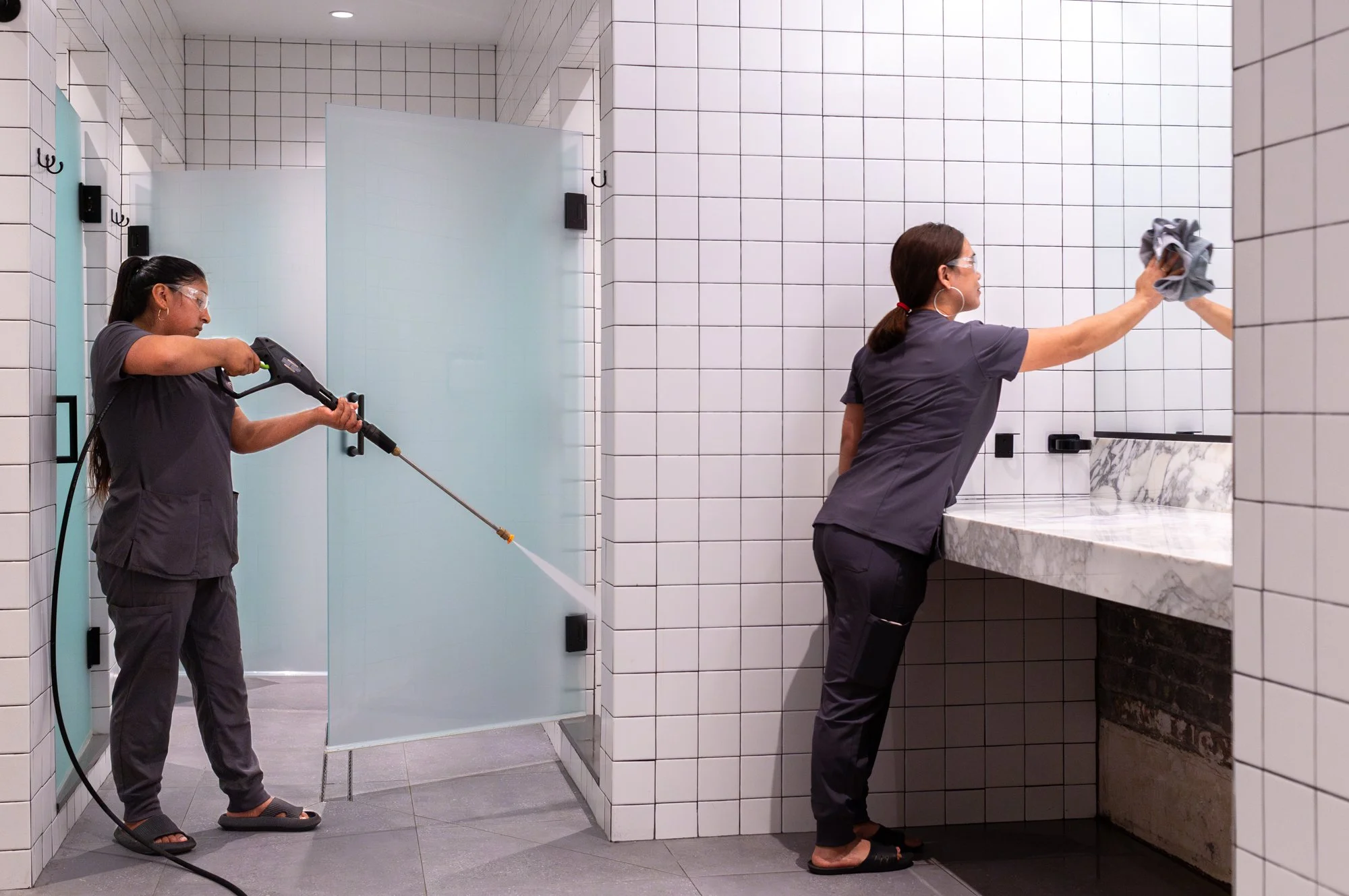
Shower areas receive particular attention, with tile, grout, and drains treated for mold, mildew, and bacterial control. Soap scum removal prepares surfaces for effective disinfection. Drain maintenance addresses biofilm buildup that generates odors and harbors bacteria. Ventilation system cleaning removes accumulated moisture and organic material that supports microbial growth.
Locker sanitization includes interior and exterior surfaces, shelves, hooks, and ventilation openings. Benches and seating areas receive thorough disinfection, particularly important in fitness facilities where skin contact is direct. Floor sanitization removes sweat, soil, and microorganisms from textured surfaces. The comprehensive approach creates a hygienic environment that protects users and meets health department expectations for fitness and athletic facilities.
- -Shower area mold and mildew treatment
- -Drain biofilm removal and maintenance
- -Locker interior and exterior sanitization
- -Bench and seating disinfection
- -Floor and ventilation system cleaning
EPA-Registered Disinfectants and Proper Application
Effective sanitization requires appropriate disinfectant selection and proper application. Professional services use EPA-registered disinfectants specifically formulated for restroom and locker room environments, with demonstrated efficacy against relevant pathogens. Product selection considers surface compatibility, required contact time, and safety profiles.
Common active ingredients include quaternary ammonium compounds (quats) for general disinfection, hydrogen peroxide-based products for environmentally sensitive applications, and chlorine compounds for specific pathogen challenges. Emerging technologies include electrostatic application systems that improve coverage and reduce product usage while maintaining efficacy.
Proper application techniques ensure disinfectants perform as labeled. This includes appropriate dilution for concentrated products, maintaining required dwell times, using sufficient product volume for surface wetting, and following manufacturer directions for specific pathogen claims. Professional technicians are trained in these requirements and document their procedures for compliance verification. Rotation between different active ingredients prevents pathogen resistance development.
- -EPA-registered product selection
- -Hospital-grade disinfection claims
- -Proper dilution and application training
- -Required dwell time compliance
- -Electrostatic application technology
Addressing Common Pathogens in High-Traffic Facilities
Commercial restrooms and locker rooms harbor diverse pathogenic organisms that require targeted disinfection approaches. Understanding these threats guides effective sanitization protocols.
Norovirus, the leading cause of acute gastroenteritis outbreaks, spreads rapidly in shared restroom facilities. It requires specific disinfectants with demonstrated norovicidal efficacy and careful attention to high-touch surfaces. Influenza and common cold viruses contaminate surfaces through respiratory droplets and hand contact. SARS-CoV-2 and other coronaviruses have heightened awareness of restroom disinfection importance.
Bacterial concerns include Staphylococcus aureus (including MRSA), E. coli, Salmonella, and Streptococcus species that cause skin infections and gastrointestinal illness. Fungal organisms including athlete's foot fungus (tinea pedis) thrive in locker room environments. Professional sanitization targets these organisms with appropriate disinfectant selection and thorough surface coverage, particularly on floors, benches, and shower areas where bare skin contact occurs.
- -Norovirus-specific disinfection protocols
- -Respiratory virus surface decontamination
- -MRSA and bacterial pathogen control
- -Fungal organism elimination
- -Targeted high-touch surface emphasis
Odor Control and Neutralization Techniques
Restroom and locker room odors significantly impact user experience and facility perception. Professional sanitization addresses odor sources rather than merely masking them with fragrances. Effective odor control requires understanding the biological and chemical sources of malodors.
Urine odors result from uric acid crystal deposits in porous surfaces including grout, tile, and sealants around fixtures. These crystals release odor continuously, especially when exposed to moisture. Professional treatment uses enzymatic cleaners and specialized uric acid removers that break down and remove these deposits. Bacterial odors from drains and traps require biofilm disruption and drain maintenance.
Comprehensive odor control includes ventilation assessment to ensure adequate air exchange and humidity control. Hydroxyl generators and ozone treatments neutralize airborne odor molecules. Surface sealing after cleaning prevents reabsorption of odor-causing materials. Rather than covering odors with heavy fragrances, professional services eliminate sources and leave facilities smelling clean and neutral.
- -Uric acid crystal removal from grout and tile
- -Drain biofilm treatment for odor elimination
- -Enzymatic cleaners for organic residue
- -Ventilation and humidity assessment
- -Hydroxyl and odor neutralization technology
Touchpoint Disinfection and Cross-Contamination Prevention
High-touch surfaces in restrooms and locker rooms require particular attention as primary transmission points for pathogens. Professional sanitization protocols specifically address these frequent contact points with enhanced disinfection.
Key restroom touchpoints include door handles and push plates, faucet handles, soap and sanitizer dispensers, paper towel dispensers, toilet and urinal flush mechanisms, stall door latches, and light switches. In locker rooms, locker handles and latches, bench surfaces, shower controls, and vending machine interfaces demand attention. These surfaces receive thorough disinfection with appropriate dwell time.
Cross-contamination prevention during the cleaning process itself is equally important. Professional technicians use color-coded microfiber cloths and mop systems to prevent transferring pathogens between surfaces. Disposable wipes or properly sanitized cloths ensure each surface receives fresh disinfectant application. Personal protective equipment protects workers while preventing them from becoming disease vectors. Systematic cleaning patterns move from least contaminated to most contaminated areas.
- -Comprehensive high-touch surface inventory
- -Enhanced disinfection protocols for touchpoints
- -Color-coded cleaning system implementation
- -Fresh application for each surface
- -Systematic contamination control procedures
OSHA and Health Department Compliance Standards
Professional restroom and locker room sanitization ensures compliance with regulatory standards protecting worker and public health. Understanding these requirements helps Dallas facilities meet their legal and ethical obligations.
OSHA's Bloodborne Pathogens Standard (29 CFR 1910.1030) applies to facilities where employees may encounter blood or bodily fluids, including restrooms. The standard requires appropriate cleaning and disinfection procedures, personal protective equipment, and worker training. Hazard Communication Standard requirements ensure workers understand chemical hazards and proper handling.
Health department regulations for food service, healthcare, and public facilities specify sanitation requirements including cleaning frequencies, approved disinfectants, and documentation. Dallas County Health and Human Services and Texas Department of State Health Services provide specific guidance for various facility types. Professional sanitization services maintain current knowledge of these requirements and document their compliance, providing records for facility managers and inspectors.
Green cleaning and sustainability initiatives also influence product selection and procedures. EPA Safer Choice, Green Seal, and similar certifications identify products meeting environmental performance standards while maintaining disinfection efficacy.
- -OSHA Bloodborne Pathogens Standard compliance
- -Health department regulation adherence
- -Proper documentation for inspections
- -Worker safety and training protocols
- -Environmental compliance options
Frequently Asked Questions
How often should commercial bathrooms be fully sanitized?
Sanitization frequency depends on facility type, traffic volume, and regulatory requirements. High-traffic public restrooms in retail or transportation facilities may need daily or multiple times daily sanitization. Standard office restrooms typically require weekly professional sanitization with daily spot disinfection of touchpoints. Healthcare facilities follow strict infection control schedules with multiple daily terminal cleans. Fitness facility locker rooms need daily sanitization due to sweat and bare skin contact. Food service facilities follow health department mandates, often requiring sanitization after each shift. Professional assessments recommend appropriate schedules based on specific facility conditions and usage patterns.
What disinfectants are effective against norovirus and influenza?
Norovirus requires disinfectants with specific efficacy claims—standard quaternary ammonium compounds are generally ineffective. Effective options include chlorine bleach solutions (1000-5000 ppm), hydrogen peroxide-based products, and EPA-registered emerging viral pathogen claims. For influenza, most EPA-registered hospital-grade disinfectants are effective when used according to label directions with proper dwell times. Professional services select products with demonstrated efficacy against target organisms and ensure proper application including adequate contact time. For norovirus specifically, the EPA maintains List G of registered antimicrobial products effective against norovirus.
How do you prevent mold growth in locker room facilities?
Mold prevention in locker rooms requires moisture control, regular cleaning, and proactive treatments. Professional services address existing mold through antimicrobial treatment and removal, then implement prevention strategies. Ventilation improvement ensures adequate air exchange to reduce humidity. Daily removal of organic material (soap scum, body oils, sweat) eliminates mold food sources. Grout and caulk maintenance prevents moisture penetration into wall cavities. Regular professional treatments with mold inhibitors provide ongoing protection. For persistent issues, humidity monitoring and dehumidification recommendations help facilities maintain conditions below 60% relative humidity where mold struggles to grow.
Are your sanitization products environmentally friendly?
Professional sanitization services offer environmentally responsible options that maintain disinfection efficacy. EPA Safer Choice certified products meet stringent environmental and health criteria while providing effective pathogen control. Hydrogen peroxide-based disinfectants break down into water and oxygen after use. Botanical and thymol-based products offer natural alternatives for sensitive environments. However, effective disinfection sometimes requires stronger chemistries for specific pathogens or heavily contaminated surfaces. Professional services can discuss green cleaning options and balance environmental goals with health protection requirements. Many products concentrate for reduced packaging and transportation impact, and application methods minimize chemical usage while ensuring coverage.
What is included in a complete restroom sanitization service?
Complete restroom sanitization includes comprehensive surface disinfection, detail cleaning, odor elimination, and quality verification. Specific elements include: high-dusting of vents and fixtures; toilet and urinal disinfection including bases, seats, handles, and surrounding areas; sink and faucet sanitization; countertop and partition cleaning; mirror and fixture polishing; dispenser sanitization; wall washing to appropriate heights; floor sanitization including baseboards; grout and tile deep cleaning; drain treatment; odor source elimination; and touchpoint emphasis. The service uses EPA-registered disinfectants with appropriate dwell times, color-coded supplies to prevent cross-contamination, and final inspection to ensure thoroughness. Results include visibly clean surfaces, neutral odor, and documented pathogen reduction.
Service Areas
We proudly serve businesses throughout the Dallas-Fort Worth metroplex, including:
services planning guide
How to plan bathroom and locker room sanitization for a commercial facility in Dallas
Janitorial Services of Dallas uses the following planning framework to help property managers and business owners turn a request for recurring janitorial and facility maintenance into a scope that can be walked, priced, scheduled, and checked. It is designed for practical comparison and does not replace site-specific safety, material, vendor, or regulatory requirements.
Define the Work Before Pricing It
Change orders are easier to avoid when the initial bathroom and locker room sanitization proposal records current conditions. Photographs, floor-type notes, access limitations, and known buildup give both sides a shared baseline for deciding what belongs in startup work and what belongs in recurring maintenance. Before pricing bathroom and locker room sanitization, document exclusions as carefully as inclusions. Exterior work, high access, consumable supplies, waste handling, specialty floor restoration, equipment interiors, and event cleanup can be scheduled correctly only when responsibility is explicit. Square footage alone does not define the effort required for bathroom and locker room sanitization. Occupancy, floor materials, restroom count, food or production activity, security procedures, furniture density, and the time available between closing and reopening all affect labor and equipment planning. Bathroom And Locker Room Sanitization should begin with a written definition of the rooms, surfaces, fixtures, equipment boundaries, and access conditions included in the work. A useful scope separates routine tasks from periodic restoration so the facility manager can see what happens on every visit and what occurs only on a planned cycle.
Build the Schedule Around Operations
A dependable plan includes a method for reporting schedule changes. The facility contact should know whom to notify, how much lead time is needed, and how missed or added visits affect the monthly program before an urgent request arises. Scheduling should be built around operating hours and risk, not around the cleaning company’s convenience. Some commercial facility environments need a complete after-hours reset, while others benefit from daytime attention to entrances, restrooms, spills, or high-traffic common areas. For Dallas–Fort Worth properties, travel windows and building access can materially affect the usable service period. A realistic schedule accounts for security handoffs and operating deadlines rather than promising a start time that leaves too little time to finish. Facilities with irregular occupancy should use a flexible service calendar. Seasonal traffic, events, construction phases, tenant move-ins, inventory cycles, and weather can all create temporary cleaning demand that a rigid schedule will miss.
Make Quality Control Observable
Useful performance conversations separate an isolated miss from a recurring process failure. One unemptied bin requires correction; repeated misses in the same wing may indicate unclear zoning, inadequate time, or a checklist that does not match the building. Quality control works best when it is tied to the site-specific scope. A supervisor can inspect completion against named rooms and outcomes, record exceptions, assign corrections, and identify patterns that require a change in staffing, tools, or frequency. Inspection frequency should reflect the complexity of the account. A small weekly office may need periodic supervisory review, while a high-traffic or regulated environment may require documented checks several times each week. Before-and-after documentation is especially valuable for one-time or restorative bathroom and locker room sanitization. It establishes the starting condition, records the completed result, and helps the facility manager decide whether a recurring maintenance cycle would prevent the same buildup.
Match Methods to Materials and Risk
Dwell time and physical removal are central to effective cleaning. A product cannot perform as intended if it is wiped away immediately, and loosened soil still needs to be removed with clean tools rather than redistributed across the surface. Consumable supplies deserve their own responsibility list. Soap, paper products, liners, dispensers, batteries, air fresheners, and specialty items may be client supplied, contractor supplied, or billed separately, but the agreement should not leave that question open. A material-safety discussion should include storage and labeling. Facility contacts should know where products and equipment will be kept, which rooms remain accessible to occupants, and how spills or damaged containers are reported. Color-coded cloths, pads, and tools can reduce cross-use between restrooms, food areas, workspaces, and public surfaces. The exact system matters less than having a documented method the crew can follow consistently.
Use the Walkthrough to Build the Scope
Bring a current floor plan, operating schedule, and list of known problem areas to the walkthrough. These details help Janitorial Services of Dallas organize bathroom and locker room sanitization around actual conditions instead of estimating from square footage and a short phone description. Access and safety constraints should be demonstrated, not merely mentioned. Alarm panels, loading doors, restricted areas, waste points, water access, electrical access, and equipment storage can change the labor plan materially. A useful walkthrough ends with next steps: who will receive the written scope, who can approve revisions, whether a second technical visit is required, and what information is still needed before pricing is final. Ask department leads or regular occupants where cleaning failures are most visible. Facility managers often know the formal complaints, while daily users can identify recurring issues such as neglected corners, supply shortages, or timing conflicts.
Put the Service Agreement in Writing
Cancellation, renewal, and notice terms deserve the same attention as the cleaning checklist. A facility manager comparing proposals should understand the initial term, renewal method, price-review process, and the notice required to change or end service. Insurance and vendor-document requirements should be confirmed during proposal review rather than after award. If the property requires a certificate, additional insured wording, vendor portal registration, or special access documentation, those steps can affect the startup date. Pricing should state whether it is monthly, per visit, hourly, or project based and should identify the assumptions behind it. Changes in occupied square footage, frequency, access time, or task scope need an agreed method for repricing. A commercial cleaning agreement should attach or reproduce the approved scope, frequency, service window, periodic task calendar, supply responsibilities, access rules, and communication contacts. The written detail protects both the property and the service team.
Plan for Dallas Facility Conditions
Heat and air-conditioning runtime can increase dust movement through vents, ledges, high surfaces, and return-air zones. Periodic detail work should be scheduled before accumulation becomes visible or begins cycling back into occupied areas. DFW traffic makes realistic arrival windows important, especially when a crew must meet security or elevator access at a fixed time. The plan should protect enough on-site time to complete the work rather than compressing the scope after a delayed handoff. Storm seasons can create short-notice needs around entrances, exterior glass, tracked moisture, construction material, and debris. A recurring account should know how to request work outside the normal scope and whether priority response is available. Properties across Dallas–Fort Worth vary widely in access, occupancy, and operating schedule. A downtown office, suburban medical suite, industrial building, retail center, and hospitality property should not receive the same labor plan simply because their square footage is similar.
Compare Providers on More Than Price
The final decision should align service frequency with the facility’s real use. Buying fewer visits than the property needs creates visible decline; buying unnecessary frequency wastes budget that could be directed to periodic or high-priority work. Review the proposal for vague language. Terms such as “as needed,” “regularly,” and “periodically” should be converted into frequencies, triggers, or approval rules before the agreement is signed. When comparing bathroom and locker room sanitization proposals, normalize the scope before comparing price. A lower monthly number may exclude periodic work, supplies, supervision, floor care, or enough labor to complete the stated checklist. Ask each provider to explain staffing assumptions, visit length, supervision, equipment, and the process for covering absences. The answer reveals whether the proposal is an operating plan or simply a price attached to a task list.
Start, Measure, and Adjust the Program
A stable program still needs review after renovations, staffing growth, seasonal traffic, operating-hour changes, or new equipment. Each change can alter soil load, access, or the time available for bathroom and locker room sanitization. After the first service cycle, compare actual labor and facility condition with the proposal assumptions. If the original scope was inaccurate, adjust it openly rather than expecting quality to survive an unrealistic workload. Closeout reporting should match the account’s complexity. A small property may need simple completion confirmation; a larger or specialized account may need inspection notes, issue photographs, supply alerts, and a record of periodic tasks. The crew should record conditions outside the approved scope rather than quietly ignoring them or performing unapproved work. Photos and concise notes allow the facility manager to decide whether a separate service is warranted.
Bring to the walkthrough
- Approximate square footage, floor plan, and operating hours
- Current frequency, known complaints, and priority areas
- Flooring and surface notes, restricted rooms, and access rules
- Desired start date, budget constraints, and approval contacts
Expect in a written proposal
- Task scope by zone and visit frequency
- Service windows, periodic work, and supply responsibility
- Quality checks, communication, and correction procedures
- Pricing assumptions, exclusions, and change-order rules