
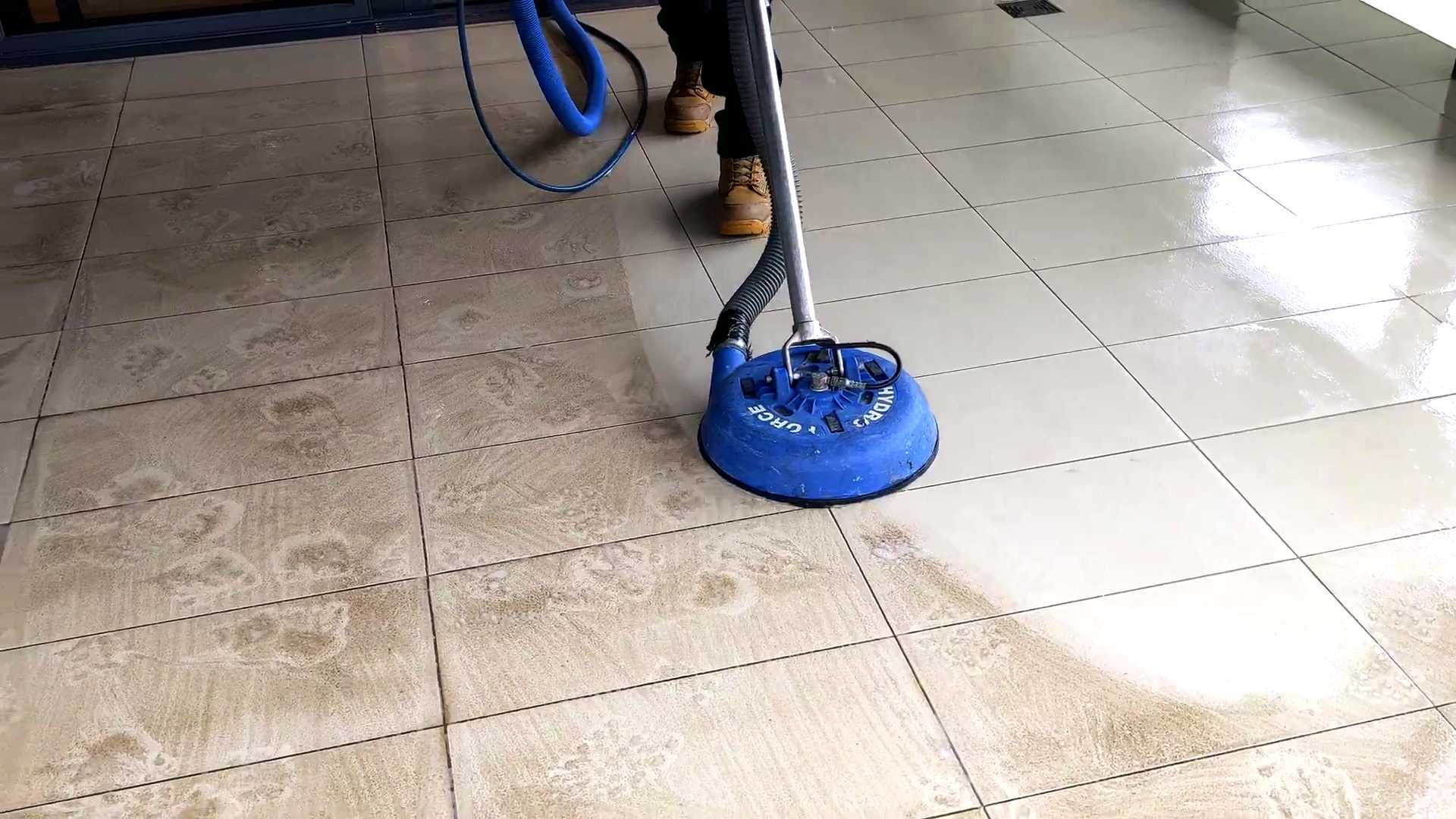
Professional Tile and Grout Restoration Services in Dallas
Transform worn, stained tile surfaces with professional restoration that brings back the original beauty and extends floor life
Professional Tile and Grout Restoration Services in Dallas
Transform worn, stained tile surfaces with professional restoration that brings back the original beauty and extends floor life
Commercial tile and grout surfaces in Dallas facilities endure constant wear from foot traffic, spills, and environmental exposure. Over time, even the most durable tile installations show signs of aging—grout lines darken with embedded soil, tiles lose their luster, and the overall appearance detracts from your professional environment. Professional tile and grout restoration addresses these issues comprehensively, often achieving dramatic transformations at a fraction of replacement cost.
Tile and grout restoration is a specialized process that goes far beyond routine mopping and maintenance cleaning. Professional technicians employ high-pressure cleaning systems, specialized chemical treatments, grout repair, color sealing, and protective coatings to restore surfaces to like-new condition. For Dallas commercial kitchens, restrooms, lobbies, and high-traffic corridors, restoration services maintain the appearance and hygiene standards your business demands while protecting your flooring investment for years to come.
Understanding Commercial Tile Types and Their Care Requirements
Commercial tile installations encompass diverse materials, each with specific cleaning and restoration requirements. Ceramic and porcelain tiles, the most common commercial choices, offer durability and stain resistance but require attention to grout maintenance. Natural stone tiles—including marble, granite, travertine, slate, and limestone—demand specialized care due to their porosity and sensitivity to acidic cleaners.
Quarry tile, frequently found in commercial kitchens and industrial settings, is extremely durable but has highly porous grout lines that readily absorb grease and soil. Terrazzo, a composite material popular in Dallas commercial buildings, requires specific polishing and restoration techniques. Understanding these material differences is essential for appropriate restoration approaches.
Professional restoration begins with comprehensive tile identification and condition assessment. Technicians evaluate existing damage, soiling levels, previous maintenance history, and installed sealants. This assessment determines appropriate cleaning agents, pressure levels, and restoration techniques. Using incorrect methods on sensitive materials can cause permanent etching, discoloration, or surface damage.
- -Proper material identification prevents damage
- -Specialized techniques for each tile type
- -Appropriate chemical selection for safe cleaning
- -Protection of natural stone investments
- -Extended floor life through correct maintenance
The Grout Restoration Process Explained
Grout restoration is often the most dramatic aspect of tile floor renewal. Cementitious grout, used in most commercial installations, is naturally porous and absorbs soil, spills, and contaminants over time. This absorption causes the darkening and staining that makes floors appear aged and dirty even when tile surfaces are clean.
Professional grout restoration typically follows a multi-step process. Initial high-pressure cleaning with heated solution removes surface soils and begins opening grout pores for deeper cleaning. Specialized grout cleaners, selected based on soil type and grout composition, penetrate and emulsify embedded contaminants. Agitation using grout brushes or rotary machines works cleaning agents into the grout lines for maximum soil release.
For severely stained grout, restoration may include grout repair or color sealing. Damaged or missing grout is removed and replaced with matching material. Color sealing applies pigmented acrylic sealers that restore uniform appearance while providing stain protection. This process essentially gives old grout a new surface that resists future staining and simplifies ongoing maintenance.
- -High-pressure heated cleaning systems
- -Specialized grout cleaning chemistry
- -Mechanical agitation for deep soil removal
- -Grout repair and replacement services
- -Color sealing for uniform appearance and protection
High-Pressure Cleaning and Steam Extraction Methods
High-pressure cleaning technology forms the foundation of professional tile and grout restoration. Modern equipment generates pressures from 500 to 3,000 PSI, combined with heated water up to 250°F, to blast away accumulated soils without damaging tile surfaces. This mechanical cleaning action removes contaminants that mopping and scrubbing cannot address.
The cleaning process employs specialized tools including rotary surface cleaners that provide uniform pressure distribution across large areas, and hand tools for edges, corners, and detail work. Vacuum recovery systems simultaneously extract dirty water, preventing residue redeposition and reducing drying time. For commercial facilities, this means minimal disruption and rapid return to service.
Steam cleaning offers an alternative for facilities requiring low-chemical or chemical-free cleaning. High-temperature steam loosens soils and sanitizes surfaces without extensive chemical use. This method is particularly appropriate for healthcare facilities, food service areas, and facilities with environmental sensitivity requirements. Professional technicians select pressure, temperature, and chemical combinations based on tile type, soiling conditions, and facility requirements.
- -High-pressure systems from 500-3,000 PSI
- -Heated water up to 250°F for maximum cleaning
- -Rotary surface cleaners for large areas
- -Vacuum recovery for residue-free results
- -Steam cleaning for chemical-sensitive environments
Sealing and Protective Coating Applications
Sealing is essential for protecting restored tile and grout surfaces and simplifying future maintenance. Unsealed grout readily absorbs spills and soils, quickly returning to pre-cleaning conditions. Professional-grade sealers create protective barriers that repel liquids, resist staining, and extend cleaning intervals.
Penetrating sealers absorb into grout and porous tiles, providing protection below the surface without changing appearance. These sealers are ideal for natural stone and maintain the original look of materials. Topical sealers form surface coatings that add shine and additional protection, appropriate for some ceramic and porcelain installations. Color sealers combine pigmentation with protection, restoring uniform grout color while sealing.
Application timing is critical—sealers must be applied to completely clean, dry surfaces for proper adhesion and performance. Professional technicians test moisture levels and ensure thorough drying before sealing. Multiple coats may be applied for enhanced protection in high-traffic or high-exposure areas. Properly applied sealers typically provide 1-3 years of protection depending on traffic and maintenance practices.
- -Prevents staining and soil absorption
- -Extends time between deep cleanings
- -Simplifies routine maintenance
- -Protects grout color and appearance
- -Reduces long-term maintenance costs
Restoration vs. Replacement: Cost Analysis
When commercial tile floors show significant wear and aging, facility managers face the decision between restoration and replacement. Professional restoration typically costs 50-75% less than complete floor replacement while delivering dramatic appearance improvement and extended service life.
Tile replacement involves material costs ($5-25 per square foot for commercial tile), demolition and disposal, substrate preparation, installation labor, and business disruption during construction. For large commercial facilities, replacement projects can extend over weeks or months, significantly impacting operations.
Restoration, by contrast, can often be completed in days with minimal disruption. Modern restoration techniques address most common issues including staining, discoloration, surface etching, and grout deterioration. Even severely damaged floors can frequently be restored to serviceable, attractive condition. When tile surfaces are structurally sound, restoration provides superior return on investment while avoiding the waste and environmental impact of replacement.
- -50-75% cost savings compared to replacement
- -Minimal business disruption
- -Reduced project timeline
- -Environmentally responsible solution
- -Extends existing floor investment
Commercial Kitchen and Restroom Tile Specialization
Commercial kitchens and restrooms present unique tile restoration challenges requiring specialized expertise. Kitchen tile faces constant exposure to grease, food soils, and sanitizing chemicals. Restroom tile deals with urine salts, soap scum, hard water deposits, and high humidity. Both environments demand thorough cleaning followed by appropriate sanitization.
Kitchen tile restoration addresses grease penetration into grout lines and porous quarry tile. Degreasing agents break down accumulated kitchen soils, while high-pressure extraction removes residues. Special attention focuses on floor drains, corners, and edges where grease accumulates. Following cleaning, sanitizing treatments ensure food-safe surfaces. Slip-resistant treatments can be applied to address safety concerns.
Restroom restoration tackles mineral deposits, urine damage, and soap scum buildup. Acidic cleaners dissolve calcium and lime deposits without damaging tile. Urine-damage repair may require grout removal and replacement in severely affected areas. Antimicrobial treatments help control odor-causing bacteria. Proper sealing after restoration prevents rapid re-soiling and extends cleaning intervals.
- -Grease removal and kitchen floor restoration
- -Urine damage repair and odor elimination
- -Hard water deposit removal
- -Food-safe and antimicrobial treatments
- -Slip-resistant coating applications
Preventative Maintenance Programs
Following professional restoration, ongoing maintenance preserves results and extends intervals between intensive services. Preventative maintenance programs combine regular professional service with staff training on proper daily care.
Daily maintenance recommendations include prompt spill cleanup, proper dilution of cleaning chemicals, and use of appropriate equipment. Entrance matting significantly reduces soil tracking onto tile floors. Scheduled burnishing or polishing maintains surface appearance on applicable tile types.
Professional maintenance visits address grout lines and deep cleaning needs that daily maintenance cannot achieve. Frequency depends on traffic and exposure—high-traffic commercial kitchens may need monthly attention, while office lobbies might require quarterly service. Maintenance agreements provide scheduled service, priority response for issues, and predictable budgeting for floor care expenses.
Dallas businesses benefit from maintenance programs tailored to local conditions, including dust management during dry periods and humidity considerations during summer months. Professional providers understand these regional factors and adjust recommendations accordingly.
- -Scheduled maintenance visits
- -Staff training on proper daily care
- -Entrance matting recommendations
- -Predictable service scheduling and budgeting
- -Regional condition considerations
Frequently Asked Questions
How do you clean heavily stained grout lines?
Heavily stained grout requires a systematic approach combining chemical treatment and mechanical action. Professional cleaners apply specialized alkaline or enzymatic cleaners that penetrate grout pores and break down embedded soils. Mechanical agitation using grout brushes or rotary scrubbers works cleaning agents into the grout. High-pressure heated extraction then removes suspended soils. For stains resistant to cleaning, color sealing provides a new surface that covers discoloration while adding stain protection. In cases of severe damage, grout removal and replacement may be necessary.
What is the difference between grout cleaning and grout restoration?
Grout cleaning removes surface soils and some embedded contamination through chemical and mechanical processes. Grout restoration is more comprehensive, addressing deeper issues including damaged grout repair, color restoration through staining or color sealing, and long-term protection application. Restoration often achieves results that cleaning alone cannot, particularly with aged or severely stained grout. Restoration transforms appearance and provides protection that extends time between services, while cleaning maintains surfaces between restoration cycles.
How long does tile sealing last in commercial environments?
Sealer longevity depends on sealer type, traffic levels, cleaning practices, and environmental exposure. In typical commercial settings, penetrating grout sealers last 1-2 years before reapplication is needed. High-traffic areas like entryways and commercial kitchens may need annual resealing. Topical sealers on tile surfaces typically last 6 months to 2 years depending on wear. Proper maintenance extends sealer life—using pH-neutral cleaners rather than harsh chemicals, avoiding abrasive scrubbing, and prompt spill cleanup all help maintain protective properties. Professional testing can determine when resealing is necessary.
Can you match existing grout color during restoration?
Yes, professional restoration includes color matching for grout repair and color sealing. For grout replacement, technicians can typically match existing grout by selecting from standard commercial grout colors or custom tinting. Color sealing offers even more precise matching, as pigmented sealers can be mixed to match or change existing grout color. This process is particularly valuable when original grout has uneven discoloration, as color sealing creates uniform appearance across the entire floor. Before proceeding, technicians perform test applications to ensure color accuracy and customer satisfaction.
Is steam cleaning safe for all commercial tile types?
Steam cleaning is generally safe for most ceramic and porcelain tiles but requires caution with natural stone and certain specialty tiles. The high heat and pressure can damage sensitive materials including unsealed natural stone, certain agglomerate tiles, and tiles with delicate glazes. Professional technicians assess tile type and condition before selecting cleaning methods. For most commercial applications involving ceramic, porcelain, or quarry tile, steam cleaning provides effective, chemical-free cleaning. When steam is inappropriate, alternative low-chemical methods achieve similar results safely. Always confirm cleaning method suitability during the pre-service assessment.
Service Areas
We proudly serve businesses throughout the Dallas-Fort Worth metroplex, including:
services planning guide
How to plan tile and grout restoration for a commercial facility in Dallas
Janitorial Services of Dallas uses the following planning framework to help property managers and business owners turn a request for recurring janitorial and facility maintenance into a scope that can be walked, priced, scheduled, and checked. It is designed for practical comparison and does not replace site-specific safety, material, vendor, or regulatory requirements.
Define the Work Before Pricing It
Square footage alone does not define the effort required for tile and grout restoration. Occupancy, floor materials, restroom count, food or production activity, security procedures, furniture density, and the time available between closing and reopening all affect labor and equipment planning. The strongest tile and grout restoration plan names measurable outcomes rather than relying on broad phrases such as “keep it clean.” Examples include streak-free entry glass, stocked and odor-controlled restrooms, debris-free floor edges, sanitized touchpoints, and completion before a stated opening time. Before pricing tile and grout restoration, document exclusions as carefully as inclusions. Exterior work, high access, consumable supplies, waste handling, specialty floor restoration, equipment interiors, and event cleanup can be scheduled correctly only when responsibility is explicit. Tile And Grout Restoration should begin with a written definition of the rooms, surfaces, fixtures, equipment boundaries, and access conditions included in the work. A useful scope separates routine tasks from periodic restoration so the facility manager can see what happens on every visit and what occurs only on a planned cycle.
Build the Schedule Around Operations
A nightly, daily, weekly, or project schedule changes more than visit frequency. It changes how much soil accumulates between visits, which tools are appropriate, how long each visit takes, and whether periodic deep work must be layered into the agreement. Recurring tile and grout restoration should include planned periodic work instead of waiting for visible deterioration. Rotating detail tasks through monthly or quarterly cycles protects floors, fixtures, glass, vents, edges, and other zones that routine visits cannot address completely. Facilities with irregular occupancy should use a flexible service calendar. Seasonal traffic, events, construction phases, tenant move-ins, inventory cycles, and weather can all create temporary cleaning demand that a rigid schedule will miss. Scheduling should be built around operating hours and risk, not around the cleaning company’s convenience. Some commercial facility environments need a complete after-hours reset, while others benefit from daytime attention to entrances, restrooms, spills, or high-traffic common areas.
Make Quality Control Observable
A single complaint channel prevents service issues from disappearing between building occupants, property management, and the cleaning crew. Requests should be logged with the location, task, urgency, and desired completion time so the response can be verified. A quality program should explain how corrections are handled. The facility contact needs a clear response path, a reasonable correction window, and confirmation when the issue is closed rather than a vague assurance that someone will look into it. Consistent crew assignments improve tile and grout restoration because the team learns access routines, material sensitivities, recurring problem areas, and the expectations of the facility contact. Coverage plans are still necessary for absences so consistency does not depend on one individual. Before-and-after documentation is especially valuable for one-time or restorative tile and grout restoration. It establishes the starting condition, records the completed result, and helps the facility manager decide whether a recurring maintenance cycle would prevent the same buildup.
Match Methods to Materials and Risk
Consumable supplies deserve their own responsibility list. Soap, paper products, liners, dispensers, batteries, air fresheners, and specialty items may be client supplied, contractor supplied, or billed separately, but the agreement should not leave that question open. Surface identification matters because a process that works on one material can damage another. Before tile and grout restoration, confirm flooring, stone, coated metal, glass treatments, upholstery, painted surfaces, and manufacturer restrictions that affect chemistry or agitation. Equipment should be selected for the facility rather than for convenience. HEPA filtration, low-moisture extraction, auto-scrubbing, water-fed poles, pressure equipment, or detail tools may be appropriate depending on access, surface, soil, and reopening time. Color-coded cloths, pads, and tools can reduce cross-use between restrooms, food areas, workspaces, and public surfaces. The exact system matters less than having a documented method the crew can follow consistently.
Use the Walkthrough to Build the Scope
A useful walkthrough ends with next steps: who will receive the written scope, who can approve revisions, whether a second technical visit is required, and what information is still needed before pricing is final. Discuss current service honestly during the walkthrough. What works should be preserved, what fails should be corrected, and any unrealistic expectation should be resolved before it becomes a recurring dispute after startup. Access and safety constraints should be demonstrated, not merely mentioned. Alarm panels, loading doors, restricted areas, waste points, water access, electrical access, and equipment storage can change the labor plan materially. Ask department leads or regular occupants where cleaning failures are most visible. Facility managers often know the formal complaints, while daily users can identify recurring issues such as neglected corners, supply shortages, or timing conflicts.
Put the Service Agreement in Writing
The agreement should state how holidays, weather closures, and client-requested skips are handled. These events affect visit counts and staffing, and the billing treatment should be clear before the first calendar exception. Cancellation, renewal, and notice terms deserve the same attention as the cleaning checklist. A facility manager comparing proposals should understand the initial term, renewal method, price-review process, and the notice required to change or end service. A commercial cleaning agreement should attach or reproduce the approved scope, frequency, service window, periodic task calendar, supply responsibilities, access rules, and communication contacts. The written detail protects both the property and the service team. Service-level expectations should be realistic and observable. A promise of “perfect cleaning” is less useful than response times, inspection routines, named completion outcomes, and an escalation process for repeated deficiencies.
Plan for Dallas Facility Conditions
Commercial properties in the region frequently combine offices, warehouses, showrooms, food service, or public-facing areas under one address. Zoning the scope by use keeps the cleaning method appropriate for each part of the building. Fast regional growth creates frequent move-ins, renovations, tenant turnovers, and occupancy changes. The cleaning scope should be reviewed when a property changes use instead of assuming the previous tenant’s schedule remains appropriate. DFW traffic makes realistic arrival windows important, especially when a crew must meet security or elevator access at a fixed time. The plan should protect enough on-site time to complete the work rather than compressing the scope after a delayed handoff. Properties across Dallas–Fort Worth vary widely in access, occupancy, and operating schedule. A downtown office, suburban medical suite, industrial building, retail center, and hospitality property should not receive the same labor plan simply because their square footage is similar.
Compare Providers on More Than Price
References are most useful when the compared account resembles the property in size, use, and schedule. A successful small office account does not by itself demonstrate the systems needed for a large, high-traffic, or specialized facility. Evaluate communication alongside cleaning technique. A facility manager needs timely updates, a named account contact, documented service requests, and a reliable process for resolving issues without repeatedly explaining the account. A pilot or structured startup can be useful when the facility is complex or the current condition is uncertain. Define what will be evaluated, how long the evaluation lasts, and what information determines the permanent scope. When comparing tile and grout restoration proposals, normalize the scope before comparing price. A lower monthly number may exclude periodic work, supplies, supervision, floor care, or enough labor to complete the stated checklist.
Start, Measure, and Adjust the Program
The crew should record conditions outside the approved scope rather than quietly ignoring them or performing unapproved work. Photos and concise notes allow the facility manager to decide whether a separate service is warranted. Task sequencing affects results. High dusting should precede lower-surface cleaning, dry soil removal should precede wet work, and areas with restricted reopening times should be completed early enough to dry or ventilate. A stable program still needs review after renovations, staffing growth, seasonal traffic, operating-hour changes, or new equipment. Each change can alter soil load, access, or the time available for tile and grout restoration. Crew orientation should cover the approved scope, building access, material cautions, waste handling, supply storage, security, and the communication path for exceptions. Written information is more dependable than verbal instructions passed between shifts.
Bring to the walkthrough
- Approximate square footage, floor plan, and operating hours
- Current frequency, known complaints, and priority areas
- Flooring and surface notes, restricted rooms, and access rules
- Desired start date, budget constraints, and approval contacts
Expect in a written proposal
- Task scope by zone and visit frequency
- Service windows, periodic work, and supply responsibility
- Quality checks, communication, and correction procedures
- Pricing assumptions, exclusions, and change-order rules