Commercial Carpet Shampooing and Extraction in Dallas
Deep cleaning solutions that restore commercial carpets to peak appearance and hygiene
Commercial Carpet Shampooing and Extraction in Dallas
Deep cleaning solutions that restore commercial carpets to peak appearance and hygiene
Commercial carpets endure daily punishment from foot traffic, spills, stains, and environmental soiling that gradually degrades appearance and creates hygiene concerns. While regular vacuuming maintains surface cleanliness, only periodic deep cleaning removes the embedded soils, allergens, and contaminants that accumulate within carpet fibers. For Dallas businesses, professional carpet shampooing and extraction provides the intensive cleaning necessary to protect carpet investments and maintain healthy indoor environments.
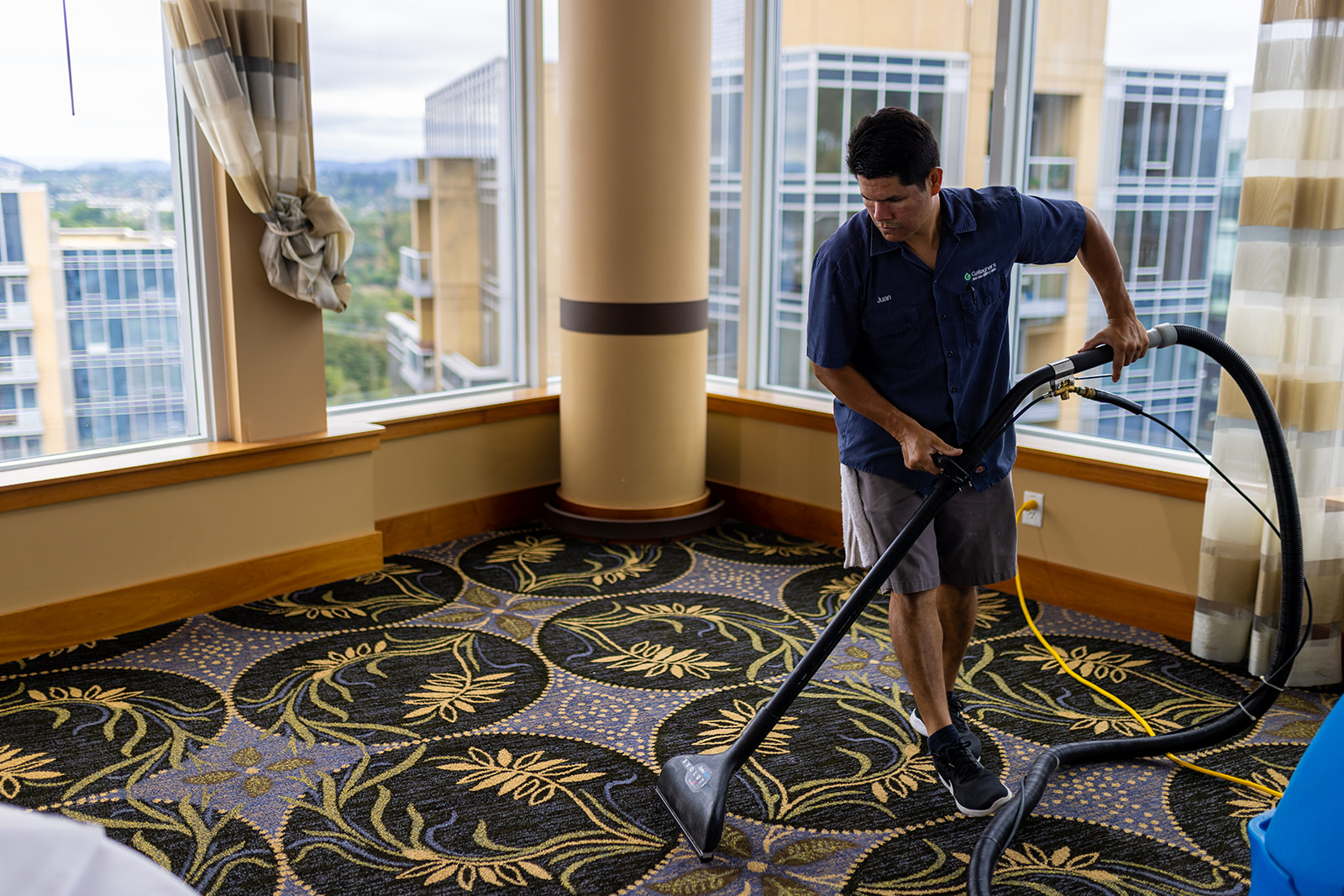
Professional carpet cleaning employs multiple technologies and methods tailored to commercial needs. Hot water extraction (steam cleaning) provides the deepest soil removal for heavily soiled areas. Shampooing addresses surface soils and maintains appearance between extraction cleanings. Encapsulation cleaning offers low-moisture maintenance options for rapid turnaround. Truck-mounted systems deliver maximum power for large facilities, while portable units access restricted areas. For Dallas commercial properties, professional carpet cleaning represents essential maintenance that extends carpet life, improves indoor air quality, and preserves the professional appearance that supports business success.
Rotary Shampooing Method for Heavy Soil Removal
Rotary shampooing represents a traditional yet effective method for addressing heavy surface soiling on commercial carpets. This technique employs rotary floor machines with brush or pad drivers to work cleaning foam into carpet fibers, suspending soils for subsequent removal.
The shampooing process begins with thorough vacuuming to remove loose surface soil. Shampoo solution—either broadcast-sprayed or dispensed through the machine—penetrates carpet fibers. The rotary action of the machine brush works the cleaning agent into the pile, breaking the bond between soils and fibers. Suspended soils are either absorbed by pads (dry foam method) or extracted through wet vacuuming (traditional shampoo method).
Rotary shampooing offers several advantages for commercial applications: effective surface soil removal; relatively fast drying compared to hot water extraction; ability to clean large areas quickly; and lower moisture levels reducing downtime. However, shampooing primarily addresses surface soils rather than deep extraction, making it best suited for interim maintenance rather than restoration cleaning. Residue concerns require thorough extraction or rinsing to prevent rapid re-soiling.
For Dallas facilities, rotary shampooing serves as an effective maintenance method between extraction cleanings, keeping carpets presentable while extending intervals between intensive services.
- -Effective surface soil removal
- -Faster drying than extraction methods
- -Rapid coverage of large areas
- -Lower moisture for minimal downtime
- -Cost-effective maintenance option
Hot Water Extraction Technology Explained
Hot water extraction, commonly called steam cleaning, represents the most effective method for deep carpet cleaning. This technology removes embedded soils, allergens, and contaminants that other methods cannot address, making it the preferred approach for restoration cleaning.
The extraction process works through simultaneous application and removal of heated cleaning solution. Pressurized hot water (typically 120-250°F) mixed with cleaning agents is injected deep into carpet fibers. Immediately following injection, powerful vacuum extraction removes the solution along with dissolved and suspended soils. This flush-and-extract action cleans fibers from base to tip.
The heat component serves multiple functions: increased cleaning agent effectiveness; loosened oily soils and greases; reduced surface tension for better penetration; and sanitization through elevated temperatures. The extraction component is equally critical—powerful vacuum lift removes suspended soils and excess moisture, preventing residue buildup and promoting faster drying.
Professional extraction equipment achieves superior results through high heat maintenance, consistent pressure, and powerful vacuum performance. For Dallas commercial carpets, periodic hot water extraction is essential for removing Texas dust, pollen, and accumulated commercial soils that routine maintenance cannot address.
- -Deep fiber cleaning from base to tip
- -Heated solution for enhanced soil removal
- -Simultaneous application and extraction
- -Allergen and contaminant removal
- -Professional equipment advantages
Truck-Mounted vs. Portable Equipment Systems
Commercial carpet cleaning equipment falls into two main categories: truck-mounted systems offering maximum power, and portable units providing access flexibility. Understanding these options helps Dallas facilities select appropriate service approaches.
Truck-mounted systems generate superior heat, pressure, and vacuum power from dedicated vehicle engines. Heating systems maintain solution temperatures up to 250°F for maximum cleaning efficacy. Vacuum blowers create powerful suction (15-20+ horsepower equivalent) for deep soil extraction and rapid drying. Solution pressure systems deliver consistent high-pressure application. Large solution and recovery tanks support extended operation without interruption. However, truck-mounted systems require building access for hoses (typically effective to 200+ feet) and adequate parking.
Portable systems bring cleaning capability into any location regardless of external access. Electric-powered units fit in elevators and navigate to any floor. Battery-powered and propane-heated options reduce electrical requirements. While less powerful than truck-mounts, modern portable systems achieve effective results for most commercial applications. Portable equipment is essential for high-rise buildings, restricted access areas, and situations where truck mounting is impractical.
Professional services select equipment based on facility characteristics, soil conditions, and access constraints, often using both types within a single facility.
- -Truck-mounted power and efficiency
- -Portable access flexibility
- -High-rise and restricted area capability
- -Equipment selection by application
- -Combined approaches for complex facilities
Pre-Treatment and Spot Removal Techniques
Effective carpet cleaning begins before the main extraction process. Pre-treatment and spot removal prepare carpets for optimal soil suspension and removal during extraction.
Pre-spray application of alkaline cleaning solution begins breaking down oily soils and traffic lane contamination before mechanical agitation or extraction. Proper dwell time (typically 10-15 minutes) allows chemical action to occur. Traffic lane cleaners with higher alkalinity address the heavy soil accumulation common in commercial corridors and entrances. Enzyme pre-treatments digest organic soils and stains for enhanced removal.
Spot and stain removal requires identification and specific treatment approaches. Water-based stains (beverages, water-soluble soils) respond to appropriate cleaning agents and extraction. Oil-based stains (grease, oil, gum) require solvent-based spotters. Protein stains (blood, food, bodily fluids) need enzymatic treatments. Dye stains (red wine, coffee, food coloring) may require specialized reducing agents or oxidizers. Professional technicians carry comprehensive spotting kits and understand which approaches work for specific stain types without damaging carpet fibers.
For Dallas commercial carpets, pre-treatment addresses the specific soil challenges common in Texas commercial environments: oily soils from parking lot tracking; food service staining; and high particulate loads from dust and pollen.
- -Alkaline pre-spray for soil breakdown
- -Traffic lane pre-treatment
- -Spot identification and classification
- -Stain-specific treatment approaches
- -Professional spotting agent selection
Low-Moisture Encapsulation Cleaning
Encapsulation cleaning represents an advanced low-moisture method ideal for commercial maintenance programs. This technology uses specialized polymers that crystallize around soil particles, allowing removal through subsequent vacuuming.
The encapsulation process applies cleaning solution containing encapsulating polymers to carpet fibers via rotary brush machine or sprayer. Mechanical agitation works the solution into the pile where polymers surround soil particles. As the carpet dries (typically 30 minutes to 2 hours), the polymers crystallize, trapping soils in brittle residues. Subsequent vacuuming removes these crystallized particles along with encapsulated soils.
Encapsulation offers significant advantages for commercial environments: extremely rapid drying allowing immediate room use; no risk of over-wetting or wicking; excellent results on commercial glue-down carpet; improved appearance between extraction cleanings; and reduced water usage supporting sustainability goals. However, encapsulation primarily addresses surface and moderately embedded soils rather than deep restoration cleaning.
For Dallas facilities requiring frequent maintenance with minimal disruption, encapsulation provides an excellent interim cleaning method between periodic extraction services. Many commercial maintenance programs combine quarterly extraction with monthly encapsulation for optimal appearance and soil management.
- -Rapid 30-minute to 2-hour drying
- -Immediate room return to service
- -No over-wetting risks
- -Excellent for maintenance programs
- -Sustainable low-water usage
Carpet Fiber Identification and Appropriate Methods
Different carpet fibers respond differently to cleaning methods, chemicals, and moisture. Professional carpet cleaning requires fiber identification to select appropriate approaches that clean effectively without causing damage.
Nylon, the most common commercial carpet fiber, offers excellent durability and responds well to most cleaning methods. Its resilience allows aggressive cleaning when needed. Polyester provides good stain resistance but can be oil-attracting—cleaning must address oily soils specifically. Olefin (polypropylene) resists moisture and staining but attracts oils strongly; hot water extraction with appropriate chemistry is essential. Wool, found in some high-end commercial installations, requires careful pH-neutral cleaning to prevent damage; excessive moisture and high alkalinity can cause shrinkage, browning, or fiber degradation.
Fiber identification begins with visual inspection and burn testing if necessary. Professional technicians recognize fiber characteristics and apply appropriate methods: pH limitations for wool; deflocculating surfactants for olefin; oxidizing agents for polyester stains; and appropriate temperatures for each fiber type.
For Dallas commercial facilities, professional fiber identification prevents cleaning damage that voids warranties and causes permanent carpet deterioration. Many commercial installations use blended fibers requiring balanced approaches.
- -Nylon cleaning considerations
- -Polyester oil attraction management
- -Olefin-specific approaches
- -Wool care requirements
- -Blended fiber protocols
Drying Techniques and Moisture Monitoring
Proper drying is essential for carpet cleaning success. Excess moisture creates problems including extended downtime, odor development, mold risk, and rapid re-soiling from wicking. Professional services employ drying techniques that minimize these risks.
Effective extraction during cleaning is the first drying step. High-quality equipment removes maximum moisture during the cleaning process. Air movers (carpet dryers) accelerate evaporation by directing airflow across carpet surfaces. Positioned immediately after cleaning, air movers can reduce drying time by 50% or more. Dehumidifiers remove moisture from the air, accelerating carpet drying and preventing humidity buildup that slows evaporation.
Moisture monitoring ensures carpets reach appropriate dryness levels before furniture replacement or heavy traffic. Moisture meters measure carpet and pad moisture content. Professional standards consider carpets dry when moisture levels reach normal equilibrium with building conditions (typically 10-12% moisture content). Odor assessment confirms no musty smells indicating incomplete drying.
For Dallas commercial facilities, drying considerations factor into service scheduling. High summer humidity may extend drying times; climate control operation accelerates drying. Professional services plan drying resources based on conditions and occupancy requirements, ensuring carpets are ready for use when needed.
- -High-extraction equipment minimizing moisture
- -Air mover acceleration of drying
- -Dehumidification for humidity control
- -Moisture meter verification
- -Condition-based drying planning
Frequently Asked Questions
What is the difference between shampooing and extraction?
Shampooing and extraction are distinct carpet cleaning methods with different applications and results. Shampooing uses rotary brushes to work cleaning foam into carpet fibers, primarily addressing surface soils. The method offers faster cleaning and lower moisture but limited deep soil removal. Some shampoo methods require subsequent extraction or thorough vacuuming to remove residues. Hot water extraction (steam cleaning) injects heated cleaning solution under pressure while simultaneously extracting it along with dissolved soils. This method reaches deep into carpet fibers, removing embedded soils, allergens, and contaminants that shampooing cannot address. Extraction provides superior restoration cleaning but requires longer drying times. For commercial maintenance, shampooing serves as an effective interim method between periodic extraction cleanings. For restoration of heavily soiled carpets or annual deep cleaning, extraction is preferred.
How long do carpets take to dry after extraction cleaning?
Drying time depends on equipment quality, carpet type, humidity, airflow, and temperature. With professional truck-mounted extraction and air movers, commercial carpets typically dry in 4-8 hours. Portable equipment or high humidity may extend drying to 12-24 hours. Factors affecting drying include: extraction power—better equipment removes more moisture initially; carpet pile density—thick carpets hold more moisture; humidity levels—Dallas summer humidity slows evaporation; airflow—HVAC operation and air movers accelerate drying; and temperature—warmer conditions speed evaporation. Professional services use moisture meters to verify dryness before allowing heavy traffic or furniture replacement. To accelerate drying, facilities should maintain HVAC operation, use provided air movers, and ensure adequate ventilation. Light foot traffic with clean shoes is typically possible within 2-4 hours even if carpets aren't completely dry.
Can extraction remove deep-set stains and odors?
Hot water extraction effectively removes many deep-set stains and odors, though results depend on stain type, age, and previous treatment attempts. Extraction removes embedded soils that contribute to overall discoloration and can address many organic stains through the combination of heat, cleaning agents, and vacuum removal. However, certain stains may resist extraction: permanent dyes that have chemically bonded with fibers; stains previously treated with improper chemicals that set the stain; bleached or color-loss areas; and stains that have penetrated to carpet backing and pad. Odor removal success depends on source identification—surface odors typically respond well, while odors originating in carpet pad or subfloor may require pad replacement or specialized treatments. Professional pre-inspection identifies which stains and odors are likely to respond to extraction and which may need alternative approaches or realistic expectation setting.
Is truck-mounted equipment better than portable units?
Truck-mounted equipment generally provides superior cleaning power but isn't always the best choice for every situation. Truck-mounts offer: higher heat (up to 250°F vs. 150-200°F for portables); stronger vacuum (15-20+ hp equivalent vs. 3-5 hp); higher pressure (400-1000 PSI vs. 100-500 PSI); and continuous operation without tank emptying/filling. These advantages translate to better soil removal and faster drying. However, portables offer crucial benefits: access to high-rise buildings where hoses cannot reach; operation in areas without parking for truck-mount vans; flexibility for spot cleaning or small areas; and lower setup time for quick jobs. For large Dallas facilities with ground-level access, truck-mounts typically deliver optimal results. For high-rise offices, facilities with restricted access, or buildings where parking is unavailable, modern portable equipment provides effective cleaning. Many professional services use both, selecting equipment based on specific job requirements.
How often should commercial carpets be shampooed?
Shampooing frequency depends on traffic levels, carpet type, appearance standards, and maintenance program structure. As an interim maintenance method between extraction cleanings, shampooing is typically performed monthly to quarterly. High-traffic retail or hospitality environments may benefit from monthly shampooing. General office environments often use quarterly shampooing with semi-annual extraction. Low-traffic areas may need only semi-annual shampooing. Extraction cleaning (deeper restoration) is typically scheduled semi-annually to annually depending on conditions. Facilities using encapsulation (a low-moisture alternative to shampooing) may service high-traffic areas monthly with extraction every 6-12 months. Professional assessment considers your specific traffic patterns, soil conditions, and appearance requirements to recommend optimal frequencies. The goal is maintaining consistent appearance while avoiding over-service that wastes resources or under-service that allows permanent damage.
Service Areas
We proudly serve businesses throughout the Dallas-Fort Worth metroplex, including:
services planning guide
How to plan commercial carpet shampooing and extraction for a commercial facility in Dallas
Janitorial Services of Dallas uses the following planning framework to help property managers and business owners turn a request for recurring janitorial and facility maintenance into a scope that can be walked, priced, scheduled, and checked. It is designed for practical comparison and does not replace site-specific safety, material, vendor, or regulatory requirements.
Define the Work Before Pricing It
A commercial scope should distinguish appearance cleaning from hygiene work and asset maintenance. Dust removal, disinfection, floor finish care, glass restoration, and debris control solve different problems, use different processes, and often belong on different frequencies. Commercial Carpet Shampooing And Extraction should begin with a written definition of the rooms, surfaces, fixtures, equipment boundaries, and access conditions included in the work. A useful scope separates routine tasks from periodic restoration so the facility manager can see what happens on every visit and what occurs only on a planned cycle. For multi-tenant or mixed-use properties, commercial carpet shampooing and extraction should be divided by responsibility zone. Common areas, tenant suites, back-of-house spaces, loading areas, public restrooms, and restricted rooms can then receive schedules and approval rules that match their actual use. Square footage alone does not define the effort required for commercial carpet shampooing and extraction. Occupancy, floor materials, restroom count, food or production activity, security procedures, furniture density, and the time available between closing and reopening all affect labor and equipment planning.
Build the Schedule Around Operations
For Dallas–Fort Worth properties, travel windows and building access can materially affect the usable service period. A realistic schedule accounts for security handoffs and operating deadlines rather than promising a start time that leaves too little time to finish. Facilities with irregular occupancy should use a flexible service calendar. Seasonal traffic, events, construction phases, tenant move-ins, inventory cycles, and weather can all create temporary cleaning demand that a rigid schedule will miss. Access planning is part of service planning. Keys, badges, alarm procedures, loading access, elevator reservations, escort rules, and locked-room approvals should be confirmed before the first commercial carpet shampooing and extraction visit so the crew can complete the full scope without improvising. A nightly, daily, weekly, or project schedule changes more than visit frequency. It changes how much soil accumulates between visits, which tools are appropriate, how long each visit takes, and whether periodic deep work must be layered into the agreement.
Make Quality Control Observable
The account review should examine service requests, inspection findings, occupancy changes, supply use, and upcoming facility events. That review keeps the program aligned with the property instead of allowing an old scope to continue after the building changes. Inspection frequency should reflect the complexity of the account. A small weekly office may need periodic supervisory review, while a high-traffic or regulated environment may require documented checks several times each week. A quality program should explain how corrections are handled. The facility contact needs a clear response path, a reasonable correction window, and confirmation when the issue is closed rather than a vague assurance that someone will look into it. Consistent crew assignments improve commercial carpet shampooing and extraction because the team learns access routines, material sensitivities, recurring problem areas, and the expectations of the facility contact. Coverage plans are still necessary for absences so consistency does not depend on one individual.
Match Methods to Materials and Risk
Surface identification matters because a process that works on one material can damage another. Before commercial carpet shampooing and extraction, confirm flooring, stone, coated metal, glass treatments, upholstery, painted surfaces, and manufacturer restrictions that affect chemistry or agitation. Equipment should be selected for the facility rather than for convenience. HEPA filtration, low-moisture extraction, auto-scrubbing, water-fed poles, pressure equipment, or detail tools may be appropriate depending on access, surface, soil, and reopening time. Product selection should match the task and the occupied environment. Cleaning, degreasing, disinfecting, descaling, and finishing are different functions; using one product for every surface can leave residue, reduce effectiveness, or shorten asset life. For sensitive or newly installed materials, a small test area can prevent expensive mistakes. The service plan should identify who approves the test result before broader cleaning or restoration proceeds.
Use the Walkthrough to Build the Scope
Ask department leads or regular occupants where cleaning failures are most visible. Facility managers often know the formal complaints, while daily users can identify recurring issues such as neglected corners, supply shortages, or timing conflicts. If the requested commercial carpet shampooing and extraction includes restorative work, identify the difference between a first-service reset and ongoing maintenance. Startup work may require additional labor that should not be hidden inside the recurring visit price. The walkthrough should follow the facility’s traffic pattern from entrances through work areas, restrooms, support rooms, and exits. This reveals where soil enters, where it concentrates, and which tasks must be completed in a particular order. Bring a current floor plan, operating schedule, and list of known problem areas to the walkthrough. These details help Janitorial Services of Dallas organize commercial carpet shampooing and extraction around actual conditions instead of estimating from square footage and a short phone description.
Put the Service Agreement in Writing
Pricing should state whether it is monthly, per visit, hourly, or project based and should identify the assumptions behind it. Changes in occupied square footage, frequency, access time, or task scope need an agreed method for repricing. A structured startup period gives both sides a chance to refine the scope. Early inspections and a scheduled review after the first few visits can resolve workload assumptions before they become embedded in a long-term program. Service-level expectations should be realistic and observable. A promise of “perfect cleaning” is less useful than response times, inspection routines, named completion outcomes, and an escalation process for repeated deficiencies. The agreement should explain how additional work is approved. Emergency cleanup, event service, construction dust, floor restoration, and extra porter coverage should not be performed or billed through an informal request that no one can later verify.
Plan for Dallas Facility Conditions
Properties across Dallas–Fort Worth vary widely in access, occupancy, and operating schedule. A downtown office, suburban medical suite, industrial building, retail center, and hospitality property should not receive the same labor plan simply because their square footage is similar. Commercial properties in the region frequently combine offices, warehouses, showrooms, food service, or public-facing areas under one address. Zoning the scope by use keeps the cleaning method appropriate for each part of the building. Dallas facilities contend with long cooling seasons, tracked-in dust, pollen, severe-weather debris, and rapid development activity. Those conditions can influence entry cleaning, high dusting, floor care, glass maintenance, and the timing of periodic deep work. Heat and air-conditioning runtime can increase dust movement through vents, ledges, high surfaces, and return-air zones. Periodic detail work should be scheduled before accumulation becomes visible or begins cycling back into occupied areas.
Compare Providers on More Than Price
Consider the cost of under-scoping. Persistent complaints, damaged finishes, emergency restoration, staff time spent supervising the vendor, and repeated provider changes can cost more than a properly designed recurring program. When comparing commercial carpet shampooing and extraction proposals, normalize the scope before comparing price. A lower monthly number may exclude periodic work, supplies, supervision, floor care, or enough labor to complete the stated checklist. Review the proposal for vague language. Terms such as “as needed,” “regularly,” and “periodically” should be converted into frequencies, triggers, or approval rules before the agreement is signed. References are most useful when the compared account resembles the property in size, use, and schedule. A successful small office account does not by itself demonstrate the systems needed for a large, high-traffic, or specialized facility.
Start, Measure, and Adjust the Program
Periodic tasks should be placed on a calendar at startup. Floor work, carpet extraction, glass detailing, vent cleaning, high dusting, pressure cleaning, and other rotating services are easier to budget when dates are planned. A stable program still needs review after renovations, staffing growth, seasonal traffic, operating-hour changes, or new equipment. Each change can alter soil load, access, or the time available for commercial carpet shampooing and extraction. The crew should record conditions outside the approved scope rather than quietly ignoring them or performing unapproved work. Photos and concise notes allow the facility manager to decide whether a separate service is warranted. Crew orientation should cover the approved scope, building access, material cautions, waste handling, supply storage, security, and the communication path for exceptions. Written information is more dependable than verbal instructions passed between shifts.
Bring to the walkthrough
- Approximate square footage, floor plan, and operating hours
- Current frequency, known complaints, and priority areas
- Flooring and surface notes, restricted rooms, and access rules
- Desired start date, budget constraints, and approval contacts
Expect in a written proposal
- Task scope by zone and visit frequency
- Service windows, periodic work, and supply responsibility
- Quality checks, communication, and correction procedures
- Pricing assumptions, exclusions, and change-order rules