
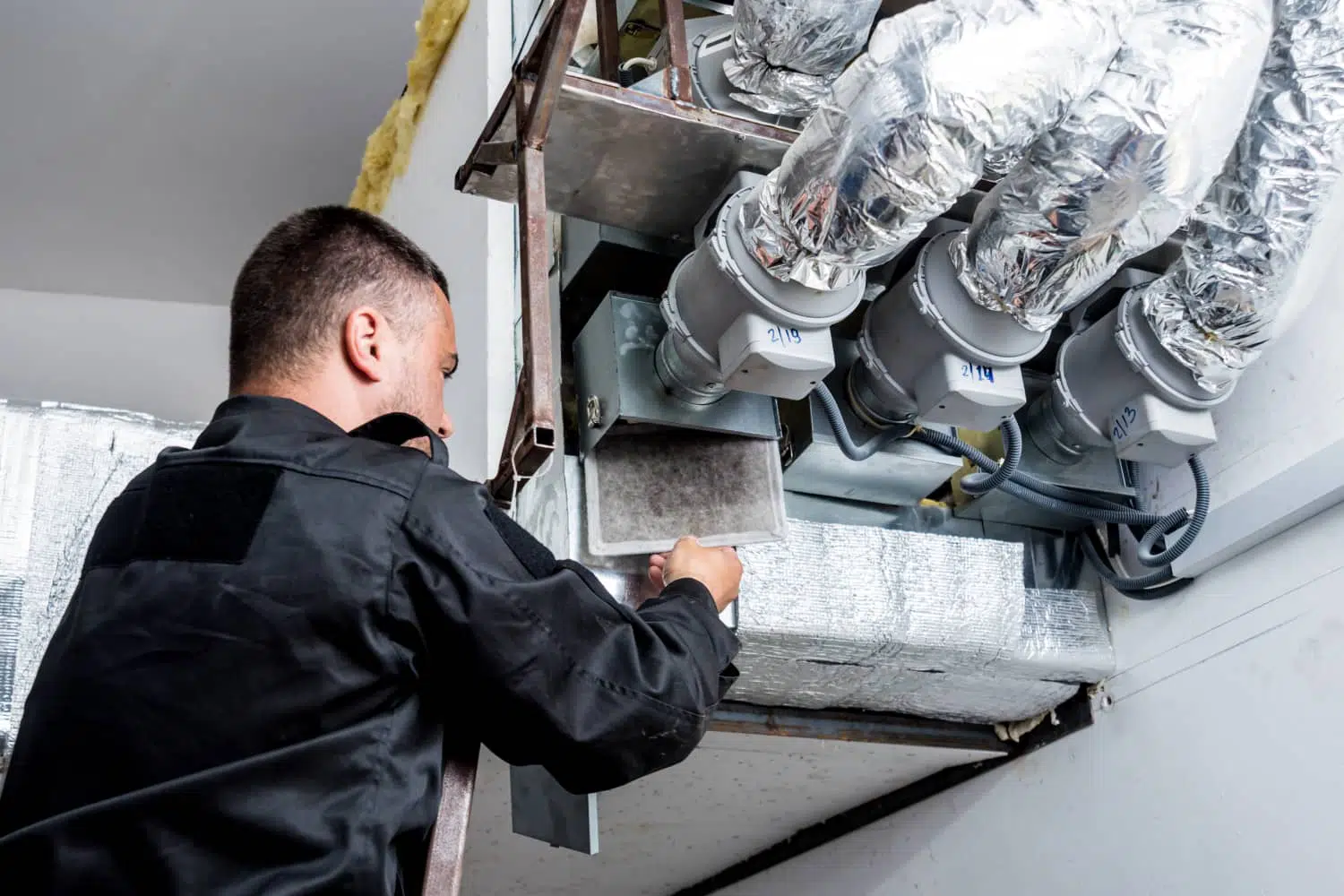
Commercial HVAC System Decontamination in Dallas
Comprehensive HVAC treatment that eliminates contamination, improves air quality, and restores system efficiency
Commercial HVAC System Decontamination in Dallas
Comprehensive HVAC treatment that eliminates contamination, improves air quality, and restores system efficiency
Commercial HVAC systems are the lungs of your building, continuously circulating air throughout occupied spaces. Over time, these complex systems accumulate dust, debris, mold, bacteria, and other contaminants that compromise indoor air quality, reduce energy efficiency, and create health concerns for building occupants. For Dallas businesses, where air conditioning operates extensively during long, hot summers, HVAC decontamination is essential maintenance that protects both people and equipment investments.
Professional HVAC system decontamination goes far beyond simple filter replacement. Comprehensive service addresses every system component that contacts conditioned air—from supply and return ductwork to coils, drain pans, blowers, and terminal units. Using specialized equipment, antimicrobial treatments, and systematic protocols, professional decontamination eliminates biological contamination and accumulated debris that routine maintenance cannot address. For Dallas commercial facilities concerned with indoor air quality, energy costs, or occupant health, HVAC decontamination delivers measurable improvements with documented results.
Comprehensive HVAC System Assessment and Testing
Effective HVAC decontamination begins with thorough assessment identifying contamination locations, types, and severity. Professional evaluation guides appropriate treatment strategies.
Visual inspection using remote cameras examines ductwork interior, air handler components, and terminal units. Camera footage reveals dust accumulation, mold growth, debris deposits, and mechanical issues affecting performance. This documentation provides baseline condition records and identifies problem areas requiring attention.
Air quality testing measures parameters including: particulate levels (various size fractions); microbial contamination (mold, bacteria); volatile organic compounds (VOCs); and carbon dioxide (ventilation adequacy). Pre-treatment testing establishes baseline conditions; post-treatment testing verifies improvement.
System performance evaluation includes airflow measurement, temperature differential across coils, and static pressure readings. These metrics identify restrictions, leaks, or inefficiencies contributing to poor performance or contamination issues.
For Dallas facilities, assessment identifies the specific challenges Texas climate creates: dust and pollen infiltration; high humidity promoting biological growth; and extensive cooling system operation concentrating indoor contaminants.
- -Remote camera inspection documentation
- -Air quality baseline testing
- -Microbial contamination identification
- -System performance evaluation
- -Condition-specific treatment planning
Coil Cleaning and Condensate Pan Sanitization
Air handler coils and condensate pans are critical contamination points where moisture, temperature differentials, and airborne debris create ideal conditions for microbial growth.
Evaporator coils (cooling coils) accumulate dust and debris that insulates heat transfer surfaces, reducing efficiency and creating pressure drop. Biological growth on coils—including mold and bacteria—produces odors and releases spores into supply air. Professional coil cleaning uses foaming cleaners that penetrate finned surfaces, followed by rinsing (where drainage permits) or vacuum extraction. Severely contaminated coils may require multiple treatment passes.
Condensate pans collect water from coil condensation. Standing water combined with organic debris creates breeding grounds for bacteria including Legionella, algae, and mold. Pan cleaning removes accumulated sludge and biofilm. Drain line cleaning ensures proper water removal. Post-cleaning treatments including biocides or pan tablets inhibit future biological growth.
For Dallas commercial facilities, coil and pan decontamination delivers immediate efficiency improvements (often 10-25% cooling capacity recovery) and eliminates major sources of indoor air quality complaints.
- -Evaporator coil foaming and cleaning
- -Condensate pan debris removal
- -Drain line cleaning and clearing
- -Biological growth elimination
- -Post-treatment antimicrobial protection
Blower Motor and Fan Assembly Cleaning
Blower assemblies including motors, wheels, and housings accumulate significant dust and debris that affects airflow, balance, and indoor air quality. Professional cleaning restores proper operation.
Blower wheels (squirrel cages) accumulate dust on blade surfaces, reducing airflow and creating imbalance that causes vibration and bearing wear. Thorough cleaning removes debris from all blade surfaces and wheel cavities. Wheel balance may be checked and corrected if significant debris removal occurred.
Housing interiors collect dust that can dislodge into airstreams. Complete housing cleaning addresses all interior surfaces. Motor exteriors are cleaned and inspected for proper operation and connection integrity. Belts are inspected, tensioned, and replaced if worn.
Variable frequency drives and control components receive careful cleaning preventing dust accumulation that causes overheating. Electrical connections are inspected for security and corrosion.
For Dallas HVAC systems operating long hours under demanding conditions, clean blower assemblies maintain airflow capacity, reduce energy consumption, and extend equipment life.
- -Blower wheel thorough cleaning
- -Housing interior decontamination
- -Motor cleaning and inspection
- -Belt inspection and adjustment
- -Control component cleaning
Antimicrobial Treatment of Ductwork and Components
Mechanical cleaning removes debris; antimicrobial treatment addresses biological contamination at the source. Professional decontamination includes appropriate antimicrobial applications.
Treatment selection depends on contamination type and severity. EPA-registered antimicrobial products include: sanitizers reducing microbial populations to safe levels; disinfectants killing specific organisms; and mildewstats preventing mold growth. Product selection considers efficacy, safety, and HVAC system compatibility.
Application methods ensure complete coverage: fogging distributes antimicrobial agents throughout ductwork; surface spraying treats accessible components; and coating applications provide persistent protection on coil and pan surfaces. Proper application rates and dwell times ensure efficacy.
For mold-contaminated systems, antimicrobial treatment follows physical removal of visible growth. Dead mold fragments can still cause allergic reactions, so removal is essential. Post-treatment verification confirms successful remediation.
For Dallas facilities, antimicrobial treatments address the mold and bacterial growth common in humid climates, providing lasting protection between maintenance cycles.
- -EPA-registered antimicrobial selection
- -Fogging application for ductwork
- -Surface treatment for components
- -Persistent coating options
- -Post-treatment verification
UV Light Installation for Ongoing Air Purification
Ultraviolet (UV) light technology provides continuous air and surface disinfection within HVAC systems, reducing biological contamination between professional service visits.
UV-C light (wavelength 200-280 nanometers) damages microbial DNA, preventing reproduction and effectively killing or inactivating bacteria, viruses, and mold. When installed in HVAC systems, UV lights illuminate coil surfaces and/or airstreams providing ongoing disinfection.
Coil-mounted UV systems prevent biological growth on evaporator coils and in condensate pans—locations where moisture and nutrients support contamination. Continuous UV exposure maintains clean coil surfaces improving efficiency and preventing odor generation.
Airstream UV systems position lights in supply ductwork to disinfect air passing through. While contact time is limited, airstream UV reduces airborne microbial loads contributing to improved indoor air quality.
Installation considerations include: proper sizing for coil or duct dimensions; lamp placement for optimal coverage; access for lamp replacement (annual typically); and safety interlocks preventing exposure to maintenance personnel.
For Dallas facilities, UV systems provide cost-effective ongoing protection supplementing periodic professional decontamination.
- -UV-C germicidal technology
- -Coil surface protection systems
- -Airstream disinfection options
- -Continuous operation benefits
- -Low maintenance requirements
Mold and Mildew Remediation in HVAC Systems
Mold contamination in HVAC systems requires specific remediation protocols addressing both visible growth and airborne spores. Professional mold remediation follows industry standards for safe, effective treatment.
Assessment determines contamination extent through visual inspection and air sampling. Mold species identification may be performed to assess health risk levels. Remediation scope addresses all contaminated components—ductwork, coils, pans, insulation, and terminal units.
Containment prevents cross-contamination during remediation. Negative air pressure and HEPA filtration isolate work areas. Removable contaminated materials including porous insulation are bagged and removed. Non-porous surfaces receive mechanical cleaning followed by antimicrobial treatment.
Post-remediation verification includes visual inspection confirming removal and air sampling confirming airborne spore reduction to acceptable levels. Documentation supports insurance claims and regulatory compliance if required.
Moisture source elimination prevents recurrence—addressing condensation issues, leaks, or humidity problems that supported mold growth.
For Dallas facilities, professional mold remediation addresses the climate-driven mold issues common in Texas HVAC systems.
- -Contamination assessment and testing
- -Containment and isolation protocols
- -Mechanical removal and antimicrobial treatment
- -Post-remediation verification
- -Moisture source correction
System Performance Verification After Decontamination
Professional HVAC decontamination includes verification that cleaning objectives were achieved and system performance improved. Documentation provides evidence of service value.
Visual verification using remote cameras documents clean ductwork and component conditions. Photos provide before/after comparison showing contamination removal. Cleanliness standards from NADCA or similar organizations define acceptable completion levels.
Air quality testing compares pre- and post-treatment measurements showing particulate reduction, microbial load decrease, and improved air quality parameters. Objective measurements demonstrate service effectiveness.
Performance testing verifies system improvements: airflow measurements showing restored capacity; temperature differential across coils demonstrating improved heat transfer; and static pressure readings indicating reduced restrictions. Energy consumption monitoring may show efficiency gains.
Comprehensive service reports document all work performed, products used, testing results, and recommendations for ongoing maintenance. This documentation supports warranty claims, regulatory compliance, and building records.
For Dallas facilities, verification documentation demonstrates return on decontamination investment and guides future maintenance decisions.
- -Visual verification photography
- -Air quality improvement documentation
- -Performance metric measurement
- -Comprehensive service reporting
- -ROI demonstration for facility management
Frequently Asked Questions
How do I know if my HVAC system needs decontamination?
Several indicators suggest HVAC decontamination is needed: persistent musty or stale odors when system operates; visible dust or debris blowing from supply vents; visible mold growth in or near ductwork, vents, or air handler; unexplained allergy or respiratory symptoms among occupants that improve when away from the building; recent water damage or flooding affecting HVAC components; construction or renovation debris in the system; excessive dust accumulation despite regular filter changes; reduced airflow from vents indicating blockage; and increased energy costs suggesting efficiency loss from dirty coils. Professional assessment including visual inspection and air quality testing provides definitive determination of contamination levels and decontamination needs. For Dallas facilities, the combination of high humidity and extensive cooling system operation makes periodic assessment particularly valuable.
What is involved in HVAC system decontamination?
HVAC decontamination is a comprehensive process addressing all system components. The process typically includes: system inspection and assessment using cameras and testing to identify contamination locations and types; ductwork cleaning using mechanical brushes, compressed air, and vacuum extraction to remove accumulated debris; air handler component cleaning including coils, blowers, housings, and drain pans; antimicrobial treatment applying EPA-registered products to eliminate biological contamination; condensate pan and drain line sanitization; filter replacement; and performance verification testing. The process requires 1-3 days depending on system size and complexity. Sections of the facility may be temporarily without conditioned air during service. Professional services coordinate timing to minimize operational disruption. Post-service documentation includes photos, test results, and completion certificates. For Dallas commercial systems, decontamination addresses the specific challenges of Texas climate and operating conditions.
How long does HVAC decontamination take?
HVAC decontamination duration depends on system size, contamination level, accessibility, and facility type. Typical timelines include: small commercial systems (under 5,000 sq ft)—1 day; medium systems (10,000-25,000 sq ft)—1-2 days; large systems (50,000+ sq ft)—2-4 days; and complex multi-unit systems—3-5 days or more. Factors extending timeline include: extensive contamination requiring aggressive treatment; difficult access requiring additional opening creation; mold remediation requiring containment and extended treatment; coordination with facility operations for area shutdowns; and post-treatment verification testing. Professional services provide detailed timelines during project planning. For Dallas facilities, scheduling considers cooling season demands—planning decontamination during mild weather periods minimizes occupant discomfort during temporary system shutdown. Phased approaches may allow partial system operation during extended projects.
Will decontamination improve my energy efficiency?
Yes, HVAC decontamination typically improves energy efficiency, though the magnitude varies by system condition. The primary efficiency gains come from coil cleaning—evaporator coils clogged with dust and biological growth act as insulators, reducing heat transfer and forcing systems to run longer to achieve temperature setpoints. Studies show coil cleaning can improve cooling efficiency by 10-25%. Additional efficiency benefits include: restored airflow from clean blowers and ductwork reducing fan energy consumption; reduced pressure drop allowing fans to operate at lower speeds; elimination of restrictions that cause systems to work harder; and restored heat exchange capacity improving temperature control precision. Efficiency gains translate directly to reduced operating costs, particularly significant for Dallas facilities with extensive cooling seasons. Professional services measure performance metrics before and after decontamination, documenting efficiency improvements for facility managers.
How often should commercial HVAC systems be decontaminated?
Decontamination frequency depends on facility type, environmental conditions, system design, and air quality requirements. General guidelines include: standard office environments—every 3-5 years; healthcare facilities—annually to bi-annually; food service and hospitality—annually; manufacturing and industrial—annually to every 2 years; and schools and childcare—every 2-3 years. Factors warranting more frequent service include: facilities in high-dust or high-pollen areas; buildings with moisture or humidity issues; systems with history of mold or biological growth; facilities with sensitive populations (elderly, immunocompromised); recent construction or renovation; and buildings with indoor air quality complaints. Dallas climate factors including dust, pollen, and humidity may suggest more frequent service than cooler, less dusty climates. Filter maintenance frequency also affects decontamination needs—poor filter maintenance accelerates system contamination. Professional assessment recommends appropriate intervals based on your specific facility conditions.
Service Areas
We proudly serve businesses throughout the Dallas-Fort Worth metroplex, including:
services planning guide
How to plan commercial hvac system decontamination for a commercial facility in Dallas
Janitorial Services of Dallas uses the following planning framework to help property managers and business owners turn a request for recurring janitorial and facility maintenance into a scope that can be walked, priced, scheduled, and checked. It is designed for practical comparison and does not replace site-specific safety, material, vendor, or regulatory requirements.
Define the Work Before Pricing It
Square footage alone does not define the effort required for commercial hvac system decontamination. Occupancy, floor materials, restroom count, food or production activity, security procedures, furniture density, and the time available between closing and reopening all affect labor and equipment planning. The strongest commercial hvac system decontamination plan names measurable outcomes rather than relying on broad phrases such as “keep it clean.” Examples include streak-free entry glass, stocked and odor-controlled restrooms, debris-free floor edges, sanitized touchpoints, and completion before a stated opening time. A walkthrough for commercial hvac system decontamination is most productive when the decision-maker identifies the spaces that create complaints, the areas that carry the most traffic, and the tasks the current program misses. Those observations turn a generic checklist into a practical scope tied to the way the property is actually used. For multi-tenant or mixed-use properties, commercial hvac system decontamination should be divided by responsibility zone. Common areas, tenant suites, back-of-house spaces, loading areas, public restrooms, and restricted rooms can then receive schedules and approval rules that match their actual use.
Build the Schedule Around Operations
A nightly, daily, weekly, or project schedule changes more than visit frequency. It changes how much soil accumulates between visits, which tools are appropriate, how long each visit takes, and whether periodic deep work must be layered into the agreement. Recurring commercial hvac system decontamination should include planned periodic work instead of waiting for visible deterioration. Rotating detail tasks through monthly or quarterly cycles protects floors, fixtures, glass, vents, edges, and other zones that routine visits cannot address completely. Daytime and after-hours service solve different operational problems. Day porter coverage manages visible conditions while people are present; after-hours crews complete disruptive or time-intensive tasks when work areas can be accessed safely and thoroughly. Scheduling should be built around operating hours and risk, not around the cleaning company’s convenience. Some commercial facility environments need a complete after-hours reset, while others benefit from daytime attention to entrances, restrooms, spills, or high-traffic common areas.
Make Quality Control Observable
A single complaint channel prevents service issues from disappearing between building occupants, property management, and the cleaning crew. Requests should be logged with the location, task, urgency, and desired completion time so the response can be verified. A quality program should explain how corrections are handled. The facility contact needs a clear response path, a reasonable correction window, and confirmation when the issue is closed rather than a vague assurance that someone will look into it. Quality control works best when it is tied to the site-specific scope. A supervisor can inspect completion against named rooms and outcomes, record exceptions, assign corrections, and identify patterns that require a change in staffing, tools, or frequency. Inspection frequency should reflect the complexity of the account. A small weekly office may need periodic supervisory review, while a high-traffic or regulated environment may require documented checks several times each week.
Match Methods to Materials and Risk
Consumable supplies deserve their own responsibility list. Soap, paper products, liners, dispensers, batteries, air fresheners, and specialty items may be client supplied, contractor supplied, or billed separately, but the agreement should not leave that question open. Surface identification matters because a process that works on one material can damage another. Before commercial hvac system decontamination, confirm flooring, stone, coated metal, glass treatments, upholstery, painted surfaces, and manufacturer restrictions that affect chemistry or agitation. For sensitive or newly installed materials, a small test area can prevent expensive mistakes. The service plan should identify who approves the test result before broader cleaning or restoration proceeds. Product selection should match the task and the occupied environment. Cleaning, degreasing, disinfecting, descaling, and finishing are different functions; using one product for every surface can leave residue, reduce effectiveness, or shorten asset life.
Use the Walkthrough to Build the Scope
A useful walkthrough ends with next steps: who will receive the written scope, who can approve revisions, whether a second technical visit is required, and what information is still needed before pricing is final. Discuss current service honestly during the walkthrough. What works should be preserved, what fails should be corrected, and any unrealistic expectation should be resolved before it becomes a recurring dispute after startup. For larger properties, divide the walkthrough into zones and record the floor type, use, occupancy, and desired frequency for each. This produces a proposal that can be adjusted by zone without rewriting the entire program. The walkthrough should follow the facility’s traffic pattern from entrances through work areas, restrooms, support rooms, and exits. This reveals where soil enters, where it concentrates, and which tasks must be completed in a particular order.
Put the Service Agreement in Writing
The agreement should state how holidays, weather closures, and client-requested skips are handled. These events affect visit counts and staffing, and the billing treatment should be clear before the first calendar exception. Cancellation, renewal, and notice terms deserve the same attention as the cleaning checklist. A facility manager comparing proposals should understand the initial term, renewal method, price-review process, and the notice required to change or end service. The agreement should explain how additional work is approved. Emergency cleanup, event service, construction dust, floor restoration, and extra porter coverage should not be performed or billed through an informal request that no one can later verify. Insurance and vendor-document requirements should be confirmed during proposal review rather than after award. If the property requires a certificate, additional insured wording, vendor portal registration, or special access documentation, those steps can affect the startup date.
Plan for Dallas Facility Conditions
Commercial properties in the region frequently combine offices, warehouses, showrooms, food service, or public-facing areas under one address. Zoning the scope by use keeps the cleaning method appropriate for each part of the building. Fast regional growth creates frequent move-ins, renovations, tenant turnovers, and occupancy changes. The cleaning scope should be reviewed when a property changes use instead of assuming the previous tenant’s schedule remains appropriate. A local service plan should account for the property’s immediate environment. Construction nearby, open parking, landscaping, loading activity, and pedestrian traffic can change how quickly dust and debris return after a visit. DFW traffic makes realistic arrival windows important, especially when a crew must meet security or elevator access at a fixed time. The plan should protect enough on-site time to complete the work rather than compressing the scope after a delayed handoff.
Compare Providers on More Than Price
References are most useful when the compared account resembles the property in size, use, and schedule. A successful small office account does not by itself demonstrate the systems needed for a large, high-traffic, or specialized facility. Evaluate communication alongside cleaning technique. A facility manager needs timely updates, a named account contact, documented service requests, and a reliable process for resolving issues without repeatedly explaining the account. A pilot or structured startup can be useful when the facility is complex or the current condition is uncertain. Define what will be evaluated, how long the evaluation lasts, and what information determines the permanent scope. Ask each provider to explain staffing assumptions, visit length, supervision, equipment, and the process for covering absences. The answer reveals whether the proposal is an operating plan or simply a price attached to a task list.
Start, Measure, and Adjust the Program
The crew should record conditions outside the approved scope rather than quietly ignoring them or performing unapproved work. Photos and concise notes allow the facility manager to decide whether a separate service is warranted. Task sequencing affects results. High dusting should precede lower-surface cleaning, dry soil removal should precede wet work, and areas with restricted reopening times should be completed early enough to dry or ventilate. Periodic tasks should be placed on a calendar at startup. Floor work, carpet extraction, glass detailing, vent cleaning, high dusting, pressure cleaning, and other rotating services are easier to budget when dates are planned. Closeout reporting should match the account’s complexity. A small property may need simple completion confirmation; a larger or specialized account may need inspection notes, issue photographs, supply alerts, and a record of periodic tasks.
Bring to the walkthrough
- Approximate square footage, floor plan, and operating hours
- Current frequency, known complaints, and priority areas
- Flooring and surface notes, restricted rooms, and access rules
- Desired start date, budget constraints, and approval contacts
Expect in a written proposal
- Task scope by zone and visit frequency
- Service windows, periodic work, and supply responsibility
- Quality checks, communication, and correction procedures
- Pricing assumptions, exclusions, and change-order rules