Disinfectant Fogging and Misting Services in Dallas
Advanced application technology for comprehensive surface disinfection and pathogen elimination throughout your facility
Disinfectant Fogging and Misting Services in Dallas
Advanced application technology for comprehensive surface disinfection and pathogen elimination throughout your facility
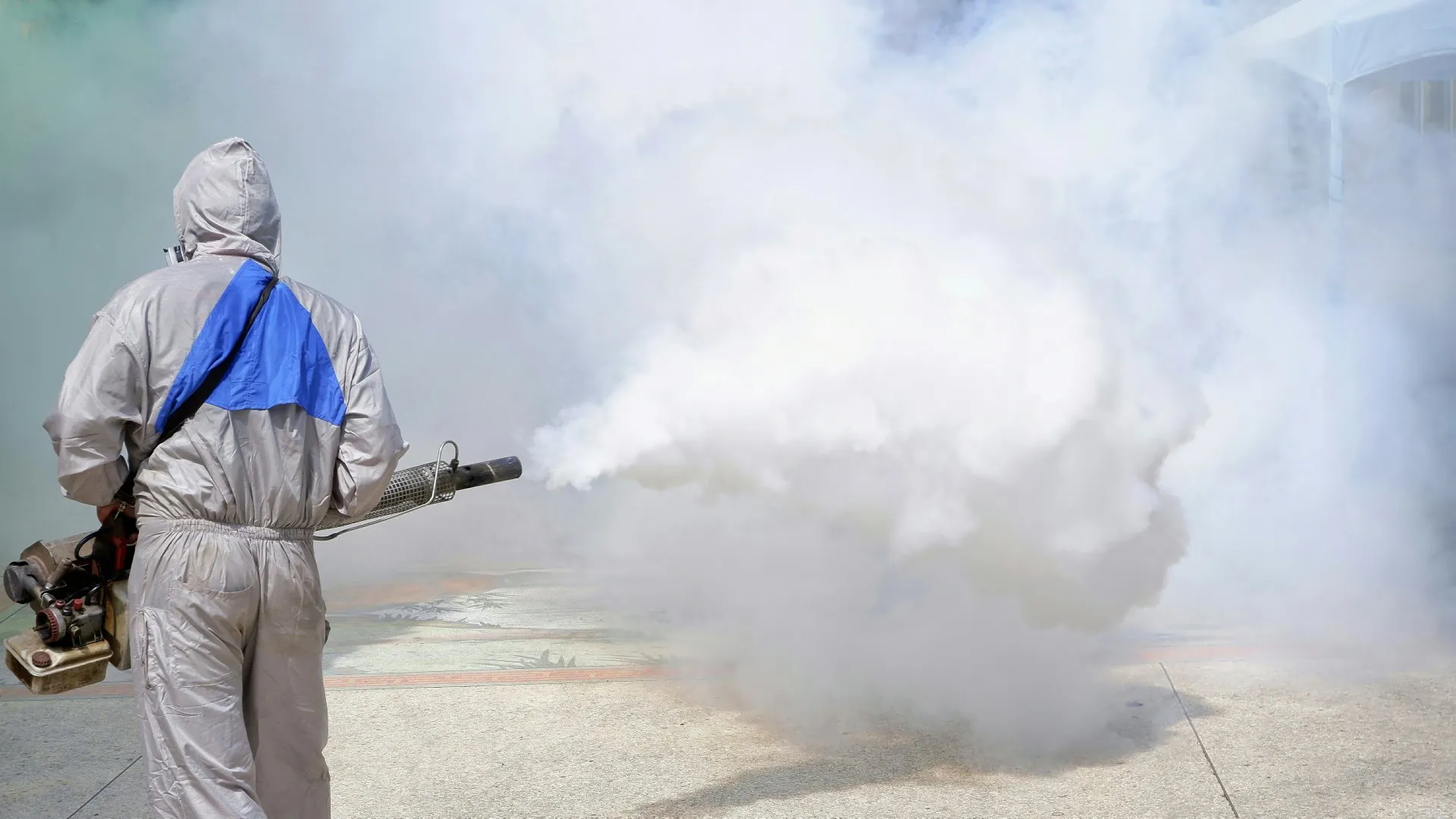
In today's health-conscious environment, Dallas businesses require more than surface cleaning—they need comprehensive disinfection that addresses every potential contamination point. Disinfectant fogging and misting technologies deliver exactly that, dispersing EPA-registered disinfectants as microscopic particles that reach areas traditional cleaning cannot access. From high ceilings and complex equipment to entire facility volumes, fogging ensures no surface remains untreated.
Professional fogging services utilize advanced equipment including electrostatic sprayers and ultra-low volume (ULV) misting systems to apply disinfectants with precision and efficiency. These technologies create charged or small-particle dispersions that wrap around surfaces, penetrate crevices, and provide complete coverage. For Dallas commercial facilities responding to health emergencies, preparing for reopening, or implementing proactive infection control, fogging offers unmatched thoroughness in pathogen elimination. Professional application ensures appropriate product selection, correct concentration, and safety protocols that protect both facility occupants and the environment.
Understanding Electrostatic Fogging Technology
Electrostatic spraying represents the most advanced method for applying liquid disinfectants to surfaces. This technology adds an electrical charge to disinfectant droplets as they exit the spray nozzle, causing them to be attracted to surfaces like magnets. The electrostatic wrap-around effect ensures complete coverage, including the backsides and undersides of objects that traditional spraying might miss.
The science behind electrostatic application relies on the principle that opposite charges attract. As charged droplets approach surfaces, they induce an opposite charge in the surface material, creating electrostatic attraction that pulls droplets to the surface. This effect occurs even when spray direction doesn't directly target the surface, allowing droplets to curve around objects and coat hidden areas.
Electrostatic sprayers typically produce droplets in the 40-80 micron range—small enough to provide thorough coverage while large enough to avoid the extended hang time and inhalation concerns associated with true fogging. The technology reduces chemical usage by 40-60% compared to conventional spraying while improving coverage consistency. For Dallas facilities requiring efficient, thorough disinfection, electrostatic application delivers superior results with reduced product consumption.
- -Complete 360-degree surface coverage
- -Reduced chemical usage (40-60% savings)
- -Wrap-around effect for complex surfaces
- -Faster application than manual methods
- -Consistent coverage thickness
Ultra-Low Volume (ULV) Misting Systems Explained
Ultra-Low Volume (ULV) misting systems generate extremely fine droplets (typically 5-50 microns) that remain suspended in air for extended periods, providing both surface contact and airborne disinfection. These systems differ from electrostatic sprayers in particle size and application method, creating true mist or fog rather than targeted spray.
ULV technology uses high-volume air streams to shear liquid disinfectant into microscopic droplets. The small particle size allows the mist to penetrate complex spaces, reach into ventilation systems, and maintain suspension for airborne pathogen contact. This characteristic makes ULV particularly valuable for treating entire room volumes, HVAC systems, and spaces with extensive equipment or obstacles.
Cold foggers (using mechanical shearing) and thermal foggers (using heat to create vapor) represent the two main ULV technologies. Cold fogging is generally preferred for disinfectant applications as it doesn't heat the chemical, preserving efficacy and avoiding potential decomposition. Professional operators adjust droplet size based on application needs—smaller droplets for airborne and penetrative treatment, larger droplets for surface deposition.
- -Particle sizes from 5-50 microns
- -Airborne and surface treatment capability
- -Complex space penetration
- -Volume-based application for whole rooms
- -Adjustable droplet size for specific needs
EPA-List N Disinfectants for Emerging Viral Pathogens
Effective fogging requires appropriate disinfectant selection. The EPA's List N identifies disinfectants effective against SARS-CoV-2, the virus causing COVID-19, and other emerging viral pathogens. Professional fogging services use only EPA-registered products with appropriate application methods for fogging or misting.
Common List N chemistries suitable for fogging include quaternary ammonium compounds (quats), hydrogen peroxide-based formulations, and some phenolic compounds. Product selection considers not just efficacy but also safety profiles, surface compatibility, and application method suitability. Not all disinfectants can be effectively applied through fogging—product labels specify approved application methods.
Electrostatic sprayers can typically use any liquid disinfectant appropriate for the target pathogens. ULV fogging requires products specifically labeled for this application method due to the inhalation and surface coverage characteristics of fine mists. Professional services verify that selected products are both effective against target organisms and approved for the application method being used. Documentation of product efficacy and proper application provides compliance verification for facility managers.
- -EPA-registered List N product selection
- -Method-appropriate disinfectant verification
- -Efficacy documentation for compliance
- -Surface compatibility assessment
- -Safety profile evaluation
Coverage Areas and Application Techniques
Fogging technology enables treatment of areas and items that challenge traditional disinfection methods. Understanding appropriate applications helps Dallas facilities maximize the value of fogging services.
Ideal fogging applications include: entire room volumes for comprehensive treatment; complex equipment with multiple surfaces and crevices; high-touch areas with extensive objects (offices with desks, computers, phones); HVAC systems and ductwork; vehicles and transportation equipment; and spaces requiring rapid turnaround between occupants. Fogging treats walls, ceilings, floors, furniture, fixtures, and equipment in a single application.
Application techniques vary by equipment and setting. Electrostatic spraying typically involves systematic movement through spaces, treating surfaces from 2-4 feet distance to maximize wrap-around effect. ULV fogging may fill room volumes with mist that settles over time, or target specific equipment and areas. Professional operators calculate application rates based on room volume, surface area, and product requirements to ensure adequate coverage without over-application. Pre-cleaning of heavily soiled surfaces is typically required for disinfectant efficacy.
- -Whole-room volume treatment
- -Complex equipment and surface coverage
- -HVAC system application capability
- -High-touch area comprehensive treatment
- -Calculable application rates for consistent coverage
Safety Protocols and Re-entry Timeframes
Safe fogging application requires adherence to established protocols protecting both operators and building occupants. Professional services implement comprehensive safety programs addressing chemical handling, personal protective equipment, ventilation, and re-entry timing.
Operator protection includes appropriate respiratory protection (typically N95 or higher for most disinfectants, P100 for certain chemicals), eye protection, gloves, and protective clothing. Application protocols ensure operators aren't exposed to concentrated chemical or excessive mist. Untrained personnel should never attempt fogging application.
Post-application safety focuses on ventilation and re-entry timing. Rooms must be adequately ventilated following treatment to remove airborne particles and dissipate any chemical vapors. Re-entry timeframes depend on product chemistry, concentration, ventilation rates, and space characteristics—typically ranging from 30 minutes to several hours. Product labels specify minimum re-entry times that must be followed. Professional services post appropriate signage during treatment and ventilation periods, and verify safe conditions before allowing occupant return.
- -Comprehensive operator PPE protocols
- -Trained application personnel only
- -Ventilation requirements post-treatment
- -Documented re-entry timeframes
- -Safety signage and communication
Industries That Benefit from Fogging Services
While fogging provides value across diverse industries, certain sectors particularly benefit from comprehensive disinfection capabilities.
Healthcare facilities use fogging for terminal disinfection of patient rooms, treatment areas, and equipment. The thoroughness addresses healthcare-associated infection risks in ways manual cleaning cannot consistently achieve. Dental and medical offices, dialysis centers, and outpatient clinics apply fogging between patients and daily.
Educational institutions fog classrooms, cafeterias, and common areas to control illness transmission among students and staff. The speed of application allows treatment during evenings or between class periods. Corporate offices fog workstations, conference rooms, and common areas, particularly during cold and flu season or following illness outbreaks.
Food service and hospitality fog dining areas, kitchens, and guest rooms. Transportation providers treat vehicles, aircraft, and terminals. Fitness centers address equipment, locker rooms, and training areas. Any facility concerned with pathogen transmission can benefit from periodic or routine fogging as part of comprehensive infection prevention programs.
- -Healthcare terminal disinfection
- -Educational facility illness control
- -Corporate office outbreak response
- -Hospitality and food service sanitation
- -Transportation equipment treatment
Validation and Efficacy Testing Methods
Professional fogging services provide validation that disinfection has been performed effectively. Various methods confirm treatment coverage and efficacy.
Visual verification includes fluorescent tracer materials that show coverage patterns under UV light. These demonstrate whether fog reached intended surfaces with adequate distribution. While not proving pathogen elimination, visual validation confirms proper application technique.
ATP (adenosine triphosphate) testing measures organic residue on surfaces before and after treatment. Significant ATP reduction indicates successful soil and biological material removal/disinfection. However, ATP testing doesn't specifically measure pathogen kill—only cleanliness.
Microbiological testing using contact plates or swabs can demonstrate bacterial and fungal reduction. Pathogen-specific testing may be available for certain organisms. Professional services can arrange third-party testing for facilities requiring documented proof of disinfection efficacy. Service documentation including product used, concentration, contact time, and coverage area provides records for compliance and quality assurance purposes.
- -Fluorescent tracer coverage verification
- -ATP testing for organic residue reduction
- -Microbiological efficacy confirmation
- -Third-party testing arrangements
- -Comprehensive service documentation
Frequently Asked Questions
How long does the disinfection from fogging last?
Disinfection is immediate upon proper application and contact time—it doesn't provide ongoing residual protection (unless using specific long-acting antimicrobial coatings, which differ from standard disinfection fogging). Once dry, standard disinfectants don't continue killing new pathogens that contact the surface. The value of fogging is comprehensive elimination of existing contamination. Recontamination can occur as soon as infected individuals or contaminated materials contact surfaces. For this reason, fogging is most valuable as part of a comprehensive infection control program including routine surface disinfection, hand hygiene, and other preventive measures, rather than a standalone solution. Some facilities implement periodic fogging (weekly, monthly) as part of ongoing maintenance.
Is fogging safe for electronics and sensitive equipment?
Fogging safety for electronics depends on equipment type, droplet size, and disinfectant chemistry. Electrostatic spraying with appropriate droplet sizes (40-80 microns) and careful application can safely treat many electronics, though direct spraying into vents or ports should be avoided. ULV fogging creates finer mist that penetrates equipment more readily and generally requires electronics to be powered down, covered, or removed. Professional services assess equipment sensitivity before treatment and may recommend alternative disinfection methods for highly sensitive items. Waterproof equipment ratings provide guidance on moisture tolerance. Post-treatment drying time before re-energizing equipment prevents moisture damage. Discuss specific equipment concerns during service consultation.
What is the difference between fogging and electrostatic spraying?
While often used interchangeably in casual discussion, fogging and electrostatic spraying are distinct technologies. Fogging (ULV) creates extremely fine droplets (5-50 microns) that remain airborne for extended periods, filling spaces with mist that settles on surfaces over time. This provides volume-based treatment and airborne disinfection. Electrostatic spraying produces larger droplets (40-80 microns) that are electrically charged to wrap around surfaces, providing targeted coverage with less airborne suspension. Electrostatic application is more controlled and typically faster for surface treatment, while fogging provides more penetrative airborne and volume treatment. Product suitability differs—some disinfectants work with both methods, while others specify application restrictions. Professional services select appropriate technology based on treatment goals, space characteristics, and product requirements.
How quickly can treated areas be reoccupied?
Re-entry timeframes vary based on disinfectant chemistry, concentration, ventilation, and space size. Most EPA-registered disinfectants applied via fogging require 30 minutes to 2 hours before re-entry, though some products may require longer periods. Factors affecting re-entry timing include: ventilation system capacity and operation; space volume and air exchange rates; temperature and humidity conditions; and specific product requirements listed on EPA labels. Professional services calculate appropriate re-entry times and post treated areas until safe conditions are verified. Some facilities prefer overnight or weekend treatment to avoid occupancy concerns entirely. Emergency situations may allow shorter re-entry with respiratory protection, though standard protocols prioritize complete safety verification before unprotected occupancy.
Does fogging replace regular cleaning services?
No, fogging complements rather than replaces regular cleaning. Effective disinfection requires surfaces to be free of heavy soil and organic matter that can shield pathogens or inactivate disinfectants. Pre-cleaning remains essential before fogging application. Additionally, fogging provides periodic comprehensive treatment but doesn't address daily soil accumulation, trash removal, or appearance maintenance that routine cleaning provides. Most facilities benefit from a combined approach: daily or routine cleaning for soil removal and appearance, periodic fogging for comprehensive disinfection of entire spaces and hard-to-reach areas, and ongoing surface disinfection of high-touch points. Fogging is particularly valuable for initial comprehensive treatment, outbreak response, preparing spaces for occupancy after vacancy, and periodic deep disinfection, while routine cleaning maintains daily standards.
Service Areas
We proudly serve businesses throughout the Dallas-Fort Worth metroplex, including:
services planning guide
How to plan disinfectant fogging and misting for a commercial facility in Dallas
Janitorial Services of Dallas uses the following planning framework to help property managers and business owners turn a request for recurring janitorial and facility maintenance into a scope that can be walked, priced, scheduled, and checked. It is designed for practical comparison and does not replace site-specific safety, material, vendor, or regulatory requirements.
Define the Work Before Pricing It
The strongest disinfectant fogging and misting plan names measurable outcomes rather than relying on broad phrases such as “keep it clean.” Examples include streak-free entry glass, stocked and odor-controlled restrooms, debris-free floor edges, sanitized touchpoints, and completion before a stated opening time. Disinfectant Fogging And Misting should begin with a written definition of the rooms, surfaces, fixtures, equipment boundaries, and access conditions included in the work. A useful scope separates routine tasks from periodic restoration so the facility manager can see what happens on every visit and what occurs only on a planned cycle. Change orders are easier to avoid when the initial disinfectant fogging and misting proposal records current conditions. Photographs, floor-type notes, access limitations, and known buildup give both sides a shared baseline for deciding what belongs in startup work and what belongs in recurring maintenance. A commercial scope should distinguish appearance cleaning from hygiene work and asset maintenance. Dust removal, disinfection, floor finish care, glass restoration, and debris control solve different problems, use different processes, and often belong on different frequencies.
Build the Schedule Around Operations
Recurring disinfectant fogging and misting should include planned periodic work instead of waiting for visible deterioration. Rotating detail tasks through monthly or quarterly cycles protects floors, fixtures, glass, vents, edges, and other zones that routine visits cannot address completely. Facilities with irregular occupancy should use a flexible service calendar. Seasonal traffic, events, construction phases, tenant move-ins, inventory cycles, and weather can all create temporary cleaning demand that a rigid schedule will miss. For Dallas–Fort Worth properties, travel windows and building access can materially affect the usable service period. A realistic schedule accounts for security handoffs and operating deadlines rather than promising a start time that leaves too little time to finish. Scheduling should be built around operating hours and risk, not around the cleaning company’s convenience. Some commercial facility environments need a complete after-hours reset, while others benefit from daytime attention to entrances, restrooms, spills, or high-traffic common areas.
Make Quality Control Observable
A quality program should explain how corrections are handled. The facility contact needs a clear response path, a reasonable correction window, and confirmation when the issue is closed rather than a vague assurance that someone will look into it. Inspection frequency should reflect the complexity of the account. A small weekly office may need periodic supervisory review, while a high-traffic or regulated environment may require documented checks several times each week. The account review should examine service requests, inspection findings, occupancy changes, supply use, and upcoming facility events. That review keeps the program aligned with the property instead of allowing an old scope to continue after the building changes. Quality control works best when it is tied to the site-specific scope. A supervisor can inspect completion against named rooms and outcomes, record exceptions, assign corrections, and identify patterns that require a change in staffing, tools, or frequency.
Match Methods to Materials and Risk
Product selection should match the task and the occupied environment. Cleaning, degreasing, disinfecting, descaling, and finishing are different functions; using one product for every surface can leave residue, reduce effectiveness, or shorten asset life. Equipment should be selected for the facility rather than for convenience. HEPA filtration, low-moisture extraction, auto-scrubbing, water-fed poles, pressure equipment, or detail tools may be appropriate depending on access, surface, soil, and reopening time. Surface identification matters because a process that works on one material can damage another. Before disinfectant fogging and misting, confirm flooring, stone, coated metal, glass treatments, upholstery, painted surfaces, and manufacturer restrictions that affect chemistry or agitation. For sensitive or newly installed materials, a small test area can prevent expensive mistakes. The service plan should identify who approves the test result before broader cleaning or restoration proceeds.
Use the Walkthrough to Build the Scope
Discuss current service honestly during the walkthrough. What works should be preserved, what fails should be corrected, and any unrealistic expectation should be resolved before it becomes a recurring dispute after startup. If the requested disinfectant fogging and misting includes restorative work, identify the difference between a first-service reset and ongoing maintenance. Startup work may require additional labor that should not be hidden inside the recurring visit price. Bring a current floor plan, operating schedule, and list of known problem areas to the walkthrough. These details help Janitorial Services of Dallas organize disinfectant fogging and misting around actual conditions instead of estimating from square footage and a short phone description. The walkthrough should follow the facility’s traffic pattern from entrances through work areas, restrooms, support rooms, and exits. This reveals where soil enters, where it concentrates, and which tasks must be completed in a particular order.
Put the Service Agreement in Writing
A commercial cleaning agreement should attach or reproduce the approved scope, frequency, service window, periodic task calendar, supply responsibilities, access rules, and communication contacts. The written detail protects both the property and the service team. A structured startup period gives both sides a chance to refine the scope. Early inspections and a scheduled review after the first few visits can resolve workload assumptions before they become embedded in a long-term program. Insurance and vendor-document requirements should be confirmed during proposal review rather than after award. If the property requires a certificate, additional insured wording, vendor portal registration, or special access documentation, those steps can affect the startup date. Service-level expectations should be realistic and observable. A promise of “perfect cleaning” is less useful than response times, inspection routines, named completion outcomes, and an escalation process for repeated deficiencies.
Plan for Dallas Facility Conditions
Dallas facilities contend with long cooling seasons, tracked-in dust, pollen, severe-weather debris, and rapid development activity. Those conditions can influence entry cleaning, high dusting, floor care, glass maintenance, and the timing of periodic deep work. Commercial properties in the region frequently combine offices, warehouses, showrooms, food service, or public-facing areas under one address. Zoning the scope by use keeps the cleaning method appropriate for each part of the building. Properties across Dallas–Fort Worth vary widely in access, occupancy, and operating schedule. A downtown office, suburban medical suite, industrial building, retail center, and hospitality property should not receive the same labor plan simply because their square footage is similar. Storm seasons can create short-notice needs around entrances, exterior glass, tracked moisture, construction material, and debris. A recurring account should know how to request work outside the normal scope and whether priority response is available.
Compare Providers on More Than Price
Evaluate communication alongside cleaning technique. A facility manager needs timely updates, a named account contact, documented service requests, and a reliable process for resolving issues without repeatedly explaining the account. When comparing disinfectant fogging and misting proposals, normalize the scope before comparing price. A lower monthly number may exclude periodic work, supplies, supervision, floor care, or enough labor to complete the stated checklist. References are most useful when the compared account resembles the property in size, use, and schedule. A successful small office account does not by itself demonstrate the systems needed for a large, high-traffic, or specialized facility. Consider the cost of under-scoping. Persistent complaints, damaged finishes, emergency restoration, staff time spent supervising the vendor, and repeated provider changes can cost more than a properly designed recurring program.
Start, Measure, and Adjust the Program
After the first service cycle, compare actual labor and facility condition with the proposal assumptions. If the original scope was inaccurate, adjust it openly rather than expecting quality to survive an unrealistic workload. A stable program still needs review after renovations, staffing growth, seasonal traffic, operating-hour changes, or new equipment. Each change can alter soil load, access, or the time available for disinfectant fogging and misting. Task sequencing affects results. High dusting should precede lower-surface cleaning, dry soil removal should precede wet work, and areas with restricted reopening times should be completed early enough to dry or ventilate. Periodic tasks should be placed on a calendar at startup. Floor work, carpet extraction, glass detailing, vent cleaning, high dusting, pressure cleaning, and other rotating services are easier to budget when dates are planned.
Bring to the walkthrough
- Approximate square footage, floor plan, and operating hours
- Current frequency, known complaints, and priority areas
- Flooring and surface notes, restricted rooms, and access rules
- Desired start date, budget constraints, and approval contacts
Expect in a written proposal
- Task scope by zone and visit frequency
- Service windows, periodic work, and supply responsibility
- Quality checks, communication, and correction procedures
- Pricing assumptions, exclusions, and change-order rules